Evelyn: Don't worry about 'why' when 'what' is right in front of you. (The Shape of Things)

Thursday, September 14, 2006

[PTP] Aristotle - MY STATEMENT

Picture:
Wonder Mountain, Toronto Area, Ontario, Canada
... i know, it doesn't look real...

MY STATEMENT


Here, that should be all about happiness... right? Well, according to Aristotle, that's not enough. He tries to answer the question "What is justice?", which Plato left unfinished. And he somewhat succeeds! And this happiness discourse is just a part of the bigger picture. Again, for more info, check out the web.
I think it's amazing, I really do... Just look at what he's saying, carefully: happiness is virtue. Virtue is ... balance, equilibrium, a state of character... So the secret of happiness would be... the middle road? I find that's plausible. I mean, although it's a bit idealistic for a man to be able to judge all these "means" (and he talks about them a lot too, in the next chapters), in my own experience I found that (adolescent) adventures which exceed the mean area are ... actually in there. The activity of doing something which brings you contempt, peace, fulfillment, intensity... all of these, even associated with pleasure (or passion, as he often says), have a MEAN (Aristotle's Golden Mean). It makes sense. And, furthermore, it's extremely well sought by religion, I bet. It's not just a coincidence that it goes way up to our times.

So, the soul is:
1. Vegetative - Plant-like, representing growth and nurturing <=> nature's call of "time to change"
2. Appetitive - Animal-like, full of desire, passion and essentially good/bad feelings (determined by wants and their results as ACTIONS/ACTIVITIES)
3. Rational (Reason) - The one thing that separates us from the rest. This also has to do with self-consciousness, belief, and... most importantly, with virtue and happiness.

Although it may not be clear that this is the way we are, he is right to some extent. You could, almost perfectly, split all of man's existance into three cathegories, and put them each in one of these 1,2,3... Right?

So, in his vision (and somewhat in mine), happiness has nothing to do with anything except... activities of the soul. Although, for me, the deepest and most rewarding activity of the soul is love, (and I am still young, yes, maybe that has a bit to do with it) I also find knowledge, sport, or art, very intense activities. Perhaps there are others... so, to be optimistic, you can look at it this way: there's a thousand ways to be happy! Really! So smile, then think of what is you and do it!

ALSO READ:
Aristotle - The basics
Aristotle - Happiness

Sink into it! (expand)

[PTP] Aristotle - Happiness


Picture:
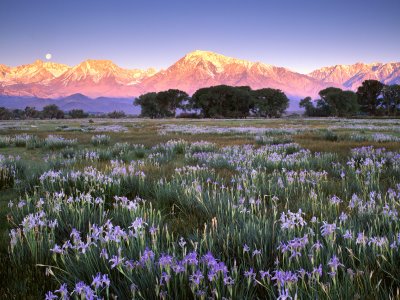
Wild Mountain, Owens Valley, California
... peace, or happiness?


The following are: Quotes from Aristotelian Nicomachean Ethics
(Check out
www.constitution.org/ari/ethic_00.htm for more info)
My comments are in Italic

Book I
8.
We must consider it (good), however, in the light not only of our conclusion and our promises, but also of what is commonly said about it; for with a true view all the data harmonize, but with a false one the facts soon clash. Now goods have been divided into three classes, and some are described as external, others as relating to soul or to body; we call those that relate to soul most properly and truly goods, and psychical actions and activities we class as relating to soul. Therefore our account must be sound, at least according to this view, which is an old one and agreed on by philosophers. It is correct also in that we identify the end with certain actions and activities; for thus it falls among goods of the soul and not among external goods. Another belief which harmonizes with our account is that the happy man lives well and does well; for we have practically defined happiness as a sort of good life and good action. The characteristics that are looked for in happiness seem also, all of them, to belong to what we have defined happiness as being. For some identify happiness with virtue, some with practical wisdom, others with a kind of philosophic wisdom, others with these, or one of these, accompanied by pleasure or not without pleasure; while others include also external prosperity. Now some of these views have been held by many men and men of old, others by a few eminent persons; and it is not probable that either of these should be entirely mistaken, but rather that they should be right in at least some one respect or even in most respects.

With those who identify happiness with virtue or some one virtue our account is in harmony; for to virtue belongs virtuous activity. But it makes, perhaps, no small difference whether we place the chief good in possession or in use, in state of mind or in activity. For the state of mind may exist without producing any good result, as in a man who is asleep or in some other way quite inactive, but the activity cannot; for one who has the activity will of necessity be acting, and acting well (justifying activity as the essence). And as in the Olympic Games it is not the most beautiful and the strongest that are crowned but those who compete (for it is some of these that are victorious), so those who act win, and rightly win, the noble and good things in life.

Their life is also in itself pleasant. For pleasure is a state of soul, and to each man that which he is said to be a lover of is pleasant; e.g. not only is a horse pleasant to the lover of horses, and a spectacle to the lover of sights, but also in the same way just acts are pleasant to the lover of justice and in general virtuous acts to the lover of virtue. Now for most men their pleasures are in conflict with one another because these are not by nature pleasant, but the lovers of what is noble find pleasant the things that are by nature pleasant; and virtuous actions are such, so that these are pleasant for such men as well as in their own nature (could it be any clearer?) . Their life, therefore, has no further need of pleasure as a sort of adventitious charm, but has its pleasure in itself (doesn't that remind you of certain religions of the world?). For, besides what we have said, the man who does not rejoice in noble actions is not even good; since no one would call a man just who did not enjoy acting justly, nor any man liberal who did not enjoy liberal actions; and similarly in all other cases. If this is so, virtuous actions must be in themselves pleasant. But they are also good and noble, and have each of these attributes in the highest degree, since the good man judges well about these attributes; his judgment is such as we have described. Happiness then is the best, noblest, and most pleasant thing in the world, and these attributes are not severed as in the inscription at Delos --

Most noble is that which is justest, and best is health;
But pleasantest is it to win what we love.(sniff... beautiful!)

For all these properties belong to the best activities; and these, or one -- the best -- of these, we identify with happiness.

Yet evidently, as we said, it needs the external goods as well; for it is impossible, or not easy, to do noble acts without the proper equipment. In many actions we use friends and riches and political power as instruments; and there are some things the lack of which takes the lustre from happiness, as good birth, goodly children, beauty; for the man who is very ugly in appearance or ill-born or solitary and childless is not very likely to be happy, and perhaps a man would be still less likely if he had thoroughly bad children or friends or had lost good children or friends by death. As we said, then, happiness seems to need this sort of prosperity in addition; for which reason some identify happiness with good fortune, though others identify it with virtue.

9. (this is only if you want to know why only conscientious human beings can be happy:)

For this reason also the question is asked, whether happiness is to be acquired by learning or by habituation or some other sort of training, or comes in virtue of some divine providence or again by chance. Now if there is any gift of the gods to men, it is reasonable that happiness should be god-given, and most surely god-given of all human things inasmuch as it is the best. But this question would perhaps be more appropriate to another inquiry; happiness seems, however, even if it is not god-sent but comes as a result of virtue and some process of learning or training, to be among the most godlike things; for that which is the prize and end of virtue seems to be the best thing in the world, and something godlike and blessed.

It will also on this view be very generally shared; for all who are not maimed as regards their potentiality for virtue may win it by a certain kind of study and care. But if it is better to be happy thus than by chance, it is reasonable that the facts should be so, since everything that depends on the action of nature is by nature as good as it can be, and similarly everything that depends on art or any rational cause, and especially if it depends on the best of all causes. To entrust to chance what is greatest and most noble would be a very defective arrangement.

The answer to the question we are asking is plain also from the definition of happiness; for it has been said to be a virtuous activity of soul, of a certain kind. Of the remaining goods, some must necessarily pre-exist as conditions of happiness, and others are naturally co-operative and useful as instruments. And this will be found to agree with what we said at the outset; for we stated the end of political science to be the best end, and political science spends most of its pains on making the citizens to be of a certain character, viz. good and capable of noble acts.

It is natural, then, that we call neither ox nor horse nor any other of the animals happy; for none of them is capable of sharing in such activity. For this reason also a boy is not happy; for he is not yet capable of such acts, owing to his age; and boys who are called happy are being congratulated by reason of the hopes we have for them. For there is required, as we said, not only complete virtue but also a complete life, since many changes occur in life, and all manner of chances, and the most prosperous may fall into great misfortunes in old age, as is told of Priam in the Trojan Cycle; and one who has experienced such chances and has ended wretchedly no one calls happy.

10. [...] For no function of man has so much permanence as virtuous activities (these are thought to be more durable even than knowledge of the sciences), and of these themselves the most valuable are more durable because those who are happy spend their life most readily and most continuously in these; for this seems to be the reason why we do not forget them. The attribute in question, then, will belong to the happy man, and he will be happy throughout his life; for always, or by preference to everything else, he will be engaged in virtuous action and contemplation, and he will bear the chances of life most nobly and altogether decorously, if he is 'truly good' and 'foursquare beyond reproach'.

13. (what is happiness? what is virtue?)
Since happiness is an activity of soul in accordance with perfect virtue, we must consider the nature of virtue; for perhaps we shall thus see better the nature of happiness. [...] But clearly the virtue we must study is human virtue; for the good we were seeking was human good and the happiness human happiness. By human virtue we mean not that of the body but that of the soul; and happiness also we call an activity of soul. [...]

Some things are said about it, adequately enough, even in the discussions outside our school, and we must use these; e.g. that one element in the soul is irrational and one has a rational principle. Whether these are separated as the parts of the body or of anything divisible are, or are distinct by definition but by nature inseparable, like convex and concave in the circumference of a circle, does not affect the present question.

Of the irrational element one division seems to be widely distributed, and vegetative in its nature, I mean that which causes nutrition and growth; for it is this kind of power of the soul that one must assign to all nurslings and to embryos, and this same power to fullgrown creatures; this is more reasonable than to assign some different power to them. Now the excellence of this seems to be common to all species and not specifically human; for this part or faculty seems to function most in sleep, while goodness and badness are least manifest in sleep (whence comes the saying that the happy are not better off than the wretched for half their lives; and this happens naturally enough, since sleep is an inactivity of the soul in that respect in which it is called good or bad), unless perhaps to a small extent some of the movements actually penetrate to the soul, and in this respect the dreams of good men are better than those of ordinary people. Enough of this subject, however; let us leave the nutritive faculty alone, since it has by its nature no share in human excellence.

There seems to be also another irrational element in the soul -- one which in a sense, however, shares in a rational principle. For we praise the rational principle of the continent man and of the incontinent, and the part of their soul that has such a principle, since it urges them aright and towards the best objects; but there is found in them also another element naturally opposed to the rational principle, which fights against and resists that principle. For exactly as paralysed limbs when we intend to move them to the right turn on the contrary to the left, so is it with the soul; the impulses of incontinent people move in contrary directions. But while in the body we see that which moves astray, in the soul we do not. No doubt, however, we must none the less suppose that in the soul too there is something contrary to the rational principle, resisting and opposing it. In what sense it is distinct from the other elements does not concern us. Now even this seems to have a share in a rational principle, as we said; at any rate in the continent man it obeys the rational principle and presumably in the temperate and brave man it is still more obedient; for in him it speaks, on all matters, with the same voice as the rational principle.

Therefore the irrational element also appears to be two-fold. For the vegetative element in no way shares in a rational principle, but the appetitive and in general the desiring element in a sense shares in it, in so far as it listens to and obeys it; this is the sense in which we speak of 'taking account' of one's father or one's friends, not that in which we speak of 'accounting for a mathematical property. That the irrational element is in some sense persuaded by a rational principle is indicated also by the giving of advice and by all reproof and exhortation. And if this element also must be said to have a rational principle, that which has a rational principle (as well as that which has not) will be twofold, one subdivision having it in the strict sense and in itself, and the other having a tendency to obey as one does one's father.

Virtue too is distinguished into kinds in accordance with this difference; for we say that some of the virtues are intellectual and others moral, philosophic wisdom and understanding and practical wisdom being intellectual, liberality and temperance moral. For in speaking about a man's character we do not say that he is wise or has understanding but that he is good-tempered or temperate; yet we praise the wise man also with respect to his state of mind; and of states of mind we call those which merit praise virtues.

Book II
5. Next we must consider what virtue is. Since things that are found in the soul are of three kinds -- passions, faculties, states of character -- virtue must be one of these. By passions I mean appetite, anger, fear, confidence, envy, joy, friendly feeling, hatred, longing, emulation, pity, and in general the feelings that are accompanied by pleasure or pain; by faculties the things in virtue of which we are said to be capable of feeling these, e.g. of becoming angry or being pained or feeling pity; by states of character the things in virtue of which we stand well or badly with reference to the passions, e.g. with reference to anger we stand badly if we feel it violently or too weakly, and well if we feel it moderately; and similarly with reference to the other passions.

Now neither the virtues nor the vices are passions, because we are not called good or bad on the ground of our passions, but are so called on the ground of our virtues and our vices, and because we are neither praised nor blamed for our passions (for the man who feels fear or anger is not praised, nor is the man who simply feels anger blamed, but the man who feels it in a certain way), but for our virtues and our vices we are praised or blamed.

Again, we feel anger and fear without choice, but the virtues are modes of choice or involve choice. Further, in respect of the passions we are said to be moved, but in respect of the virtues and the vices we are said not to be moved but to be disposed in a particular way.

For these reasons also they are not faculties; for we are neither called good nor bad, nor praised nor blamed, for the simple capacity of feeling the passions; again, we have the faculties by nature, but we are not made good or bad by nature; we have spoken of this before. If, then, the virtues are neither passions nor faculties, all that remains is that they should be states of character.

Thus we have stated what virtue is in respect of its genus.


6. (what is virtue, what does it imply?) [...]
We must, however, not only describe virtue as a state of character, but also say what sort of state it is. We may remark, then, that every virtue or excellence both brings into good condition the thing of which it is the excellence and makes the work of that thing be done well; e.g. the excellence of the eye makes both the eye and its work good; for it is by the excellence of the eye that we see well. Similarly the excellence of the horse makes a horse both good in itself and good at running and at carrying its rider and at awaiting the attack of the enemy. Therefore, if this is true in every case, the virtue of man also will be the state of character which makes a man good and which makes him do his own work well.

How this is to happen we have stated already, but it will be made plain also by the following consideration of the specific nature of virtue. In everything that is continuous and divisible it is possible to take more, less, or an equal amount, and that either in terms of the thing itself or relatively to us; and the equal is an intermediate between excess and defect. By the intermediate in the object I mean that which is equidistant from each of the extremes, which is one and the same for all men; by the intermediate relatively to us that which is neither too much nor too little -- and this is not one, nor the same for all. For instance, if ten is many and two is few, six is the intermediate, taken in terms of the object; for it exceeds and is exceeded by an equal amount; this is intermediate according to arithmetical proportion. But the intermediate relatively to us is not to be taken so; if ten pounds are too much for a particular person to eat and two too little, it does not follow that the trainer will order six pounds; for this also is perhaps too much for the person who is to take it, or too little -- too little for Milo, too much for the beginner in athletic exercises. The same is true of running and wrestling. Thus a master of any art avoids excess and defect, but seeks the intermediate and chooses this -- the intermediate not in the object but relatively to us.
[...] (for more details read chapters 6-8 from the website)
Virtue, then, is a state of character concerned with choice, lying in a mean, i.e. the mean relative to us, this being determined by a rational principle, and by that principle by which the man of practical wisdom would determine it. Now it is a mean between two vices, that which depends on excess and that which depends on defect; and again it is a mean because the vices respectively fall short of or exceed what is right in both passions and actions, while virtue both finds and chooses that which is intermediate. Hence in respect of its substance and the definition which states its essence virtue is a mean, with regard to what is best and right an extreme.

9. [...] Hence he who aims at the intermediate must first depart from what is the more contrary to it, as Calypso advises


ALSO READ:
Aristotle - The basics
Aristotle - MY STATEMENT

Sink into it! (expand)

[PTP] Aristotle - The basics

Picture:
Tuscan Morning, Italy
The beginning might be blurry, but it's just an appearance.


PTP is short from: (The) Path To Philosophy

The following are: Quotes from Aristotle's Nicomachean Ethics
(Check out
www.constitution.org/ari/ethic_00.htm for more info)

My comments are in Italic

Book I
1. EVERY art and every inquiry, and similarly every action and pursuit, is thought to aim at some good; and for this reason the good has rightly been declared to be that at which all things aim. But a certain difference is found among ends; some are activities, others are products apart from the activities that produce them. Where there are ends apart from the actions, it is the nature of the products to be better than the activities. Now, as there are many actions, arts, and sciences, their ends also are many; the end of the medical art is health, that of shipbuilding a vessel, that of strategy victory, that of economics wealth. But where such arts fall under a single capacity -- as bridle-making and the other arts concerned with the equipment of horses fall under the art of riding, and this and every military action under strategy, in the same way other arts fall under yet others -- in all of these the ends of the master arts are to be preferred to all the subordinate ends; for it is for the sake of the former that the latter are pursued. It makes no difference whether the activities themselves are the ends of the actions, or something else apart from the activities, as in the case of the sciences just mentioned.

2. If, then, there is some end of the things we do, which we desire for its own sake (everything else being desired for the sake of this), and if we do not choose everything for the sake of something else (for at that rate the process would go on to infinity, so that our desire would be empty and vain), clearly this must be the good and the chief good. Will not the knowledge of it, then, have a great influence on life? [...]

3. Now each man judges well the things he knows, and of these he is a good judge. And so the man who has been educated in a subject is a good judge of that subject, and the man who has received an all-round education is a good judge in general. Hence a young man is not a proper hearer of lectures on political science; for he is inexperienced in the actions that occur in life, but its discussions start from these and are about these; and, further, since he tends to follow his passions, his study will be vain and unprofitable, because the end aimed at is not knowledge but action. And it makes no difference whether he is young in years or youthful in character; the defect does not depend on time, but on his living, and pursuing each successive object, as passion directs. For to such persons, as to the incontinent, knowledge brings no profit; but to those who desire and act in accordance with a rational principle knowledge about such matters will be of great benefit.

4. Let us resume our inquiry and state, in view of the fact that all knowledge and every pursuit aims at some good, what it is that we say political science aims at and what is the highest of all goods achievable by action. Verbally there is very general agreement; for both the general run of men and people of superior refinement say that it is happiness, and identify living well and doing well with being happy; but with regard to what happiness is they differ, and the many do not give the same account as the wise. For the former think it is some plain and obvious thing, like pleasure, wealth, or honour; they differ, however, from one another -- and often even the same man identifies it with different things, with health when he is ill, with wealth when he is poor; but, conscious of their ignorance, they admire those who proclaim some great ideal that is above their comprehension. Now some thought that apart from these many goods there is another which is self-subsistent and causes the goodness of all these as well. To examine all the opinions that have been held were perhaps somewhat fruitless; enough to examine those that are most prevalent or that seem to be arguable.[...]

Great one:
5.[...] To judge from the lives that men lead, most men, and men of the most vulgar type, seem (not without some ground) to identify the good
, or happiness, with pleasure (hedonists); which is the reason why they love the life of enjoyment. For there are, we may say, three prominent types of life -- that just mentioned, the political, and thirdly the contemplative life. Now the mass of mankind are evidently quite slavish in their tastes, preferring a life suitable to beasts, but they get some ground for their view from the fact that many of those in high places share the tastes of Sardanapallus. A consideration of the prominent types of life shows that people of superior refinement and of active disposition identify happiness with honour; for this is, roughly speaking, the end of the political life. But it seems too superficial to be what we are looking for, since it is thought to depend on those who bestow honour rather than on him who receives it, but the good we divine to be something proper to a man and not easily taken from him. Further, men seem to pursue honour in order that they may be assured of their goodness; at least it is by men of practical wisdom that they seek to be honoured, and among those who know them, and on the ground of their virtue; clearly, then, according to them, at any rate, virtue is better. And perhaps one might even suppose this to be, rather than honour, the end of the political life. But even this appears somewhat incomplete; for possession of virtue seems actually compatible with being asleep, or with lifelong inactivity, and, further, with the greatest sufferings and misfortunes; but a man who was living so no one would call happy, unless he were maintaining a thesis at all costs. But enough of this; for the subject has been sufficiently treated even in the current discussions. Third comes the contemplative life, which we shall consider later. The life of money-making is one undertaken under compulsion, and wealth is evidently not the good we are seeking (and this was 2000 years ago!); for it is merely useful and for the sake of something else. And so one might rather take the aforenamed objects to be ends; for they are loved for themselves. But it is evident that not even these are ends; yet many arguments have been thrown away in support of them. Let us leave this subject, then.

6. [...] (see how he reaches a conclusion about good:) Clearly, then, goods must be spoken of in two ways, and some must be good in themselves, the others by reason of these. Let us separate, then, things good in themselves from things useful, and consider whether the former are called good by reference to a single Idea. What sort of goods would one call good in themselves? Is it those that are pursued even when isolated from others, such as intelligence, sight, and certain pleasures and honours? Certainly, if we pursue these also for the sake of something else, yet one would place them among things good in themselves. Or is nothing other than the Idea of good good in itself? In that case the Form will be empty. But if the things we have named are also things good in themselves, the account of the good will have to appear as something identical in them all, as that of whiteness is identical in snow and in white lead. But of honour, wisdom, and pleasure, just in respect of their goodness, the accounts are distinct and diverse. The good, therefore, is not some common element answering to one Idea.
7.
Let us again return to the good we are seeking, and ask what it can be. It seems different in different actions and arts; it is different in medicine, in strategy, and in the other arts likewise. What then is the good of each? Surely that for whose sake everything else is done. In medicine this is health, in strategy victory, in architecture a house, in any other sphere something else, and in every action and pursuit the end; for it is for the sake of this that all men do whatever else they do. Therefore, if there is an end for all that we do, this will be the good achievable by action, and if there are more than one, these will be the goods achievable by action.
(how we know happiness is our goal - read more on the website:)
Now such a thing happiness, above all else, is held to be; for this we choose always for self and never for the sake of something else, but honour, pleasure, reason, and every virtue we choose indeed for themselves (for if nothing resulted from them we should still choose each of them), but we choose them also for the sake of happiness, judging that by means of them we shall be happy. Happiness, on the other hand, no one chooses for the sake of these, nor, in general, for anything other than itself.

[...] From the point of view of self-sufficiency the same result seems to follow; for the final good is thought to be self-sufficient. Now by self-sufficient we do not mean that which is sufficient for a man by himself, for one who lives a solitary life, but also for parents, children, wife, and in general for his friends and fellow citizens, since man is born for citizenship. But some limit must be set to this; for if we extend our requirement to ancestors and descendants and friends' friends we are in for an infinite series. Let us examine this question, however, on another occasion; the self-sufficient we now define as that which when isolated makes life desirable and lacking in nothing; and such we think happiness to be; and further we think it most desirable of all things, without being counted as one good thing among others -- if it were so counted it would clearly be made more desirable by the addition of even the least of goods; for that which is added becomes an excess of goods, and of goods the greater is always more desirable. Happiness, then, is something final and self-sufficient, and is the end of action. (This is genius!)

(The way Aristotle describes the soul:)
Presumably, however, to say that happiness is the chief good seems a platitude, and a clearer account of what it is still desired. This might perhaps be given, if we could first ascertain the function of man. For just as for a flute-player, a sculptor, or an artist, and, in general, for all things that have a function or activity, the good and the 'well' is thought to reside in the function, so would it seem to be for man, if he has a function. Have the carpenter, then, and the tanner certain functions or activities, and has man none? Is he born without a function? Or as eye, hand, foot, and in general each of the parts evidently has a function, may one lay it down that man similarly has a function apart from all these? What then can this be? Life seems to be common even to plants, but we are seeking what is peculiar to man. Let us exclude, therefore, the life of nutrition and growth. Next there would be a life of perception, but it also seems to be common even to the horse, the ox, and every animal. There remains, then, an active life of the element that has a rational principle; of this, one part has such a principle in the sense of being obedient to one, the other in the sense of possessing one and exercising thought. And, as 'life of the rational element' also has two meanings, we must state that life in the sense of activity is what we mean; for this seems to be the more proper sense of the term. Now if the function of man is an activity of soul which follows or implies a rational principle, and if we say 'so-and-so-and 'a good so-and-so' have a function which is the same in kind, e.g. a lyre, and a good lyre-player, and so without qualification in all cases, eminence in respect of goodness being idded to the name of the function (for the function of a lyre-player is to play the lyre, and that of a good lyre-player is to do so well): if this is the case, and we state the function of man to be a certain kind of life, and this to be an activity or actions of the soul implying a rational principle, and the function of a good man to be the good and noble performance of these, and if any action is well performed when it is performed in accordance with the appropriate excellence: if this is the case, human good turns out to be activity of soul in accordance with virtue, and if there are more than one virtue, in accordance with the best and most complete.
But we must add 'in a complete life.' For one swallow does not make a summer, nor does one day; and so too one day, or a short time, does not make a man blessed and happy.(how can you not like this?)

ALSO:
Aristotle - Happiness
Aristotle - MY STATEMENT

Sink into it! (expand)

Monday, August 28, 2006

[New story] Back to life...


"Without leaps of imagination, or dreaming, we lose the excitement of possibilities. Dreaming, after all, is a form of planning." - Gloria Steinem - Chapter sixteen

back to reality... or not. This is so unreal...

You can't imagine what it's like to be here, now, when just 3 weeks ago you were in Ro. It's so different... maybe in a good way. I'm starting to figure out more and more about how things work around here, and, you know what? I think that if you FEEL on track, you have a greater chance of actually being on it. And I feel that one can do a whole lot of adaptation, and ... change the world?! Maybe?! It's just ... a chance. Everyone's different here. You can be anyone. Nobody will see you as being "too unusual". They're all unusual.

Americans are practical people. Maybe they're not as smart or cultured as us (or the Europeans), but they certainly have a pleasant, relaxed way of living. Sure, when you go to someone for a problem, he only knows either how to help you, or who to send you to (usually you end up in the second case if you don't know how the system works). Maybe you find it silly to get sent from office to office, because they don't communicate, they don't know each other that well, and they are only taught what they need to know... but the way you're treated makes up for that. If in Ro there's that "get the hell out of my way and move on to ya biz" attitude, here... people smile at you. And... that's weird, sure, but, you know, it actually makes you feel better?! And, like it or not, people are weaker here. "The law" cares if you are morally agressed (and Americans are sensitive to that), while in Ro, it just don't give a damn :D.

We could learn education, but they're really bad with math. I mean... really, really bad. And our children are gonna be the same by how the Romanian education is evolving... :(

My mom's taking care of a little boy now, some friends', and I went to see them today. I have always had that feeling that I don't know what to do around little children. You know, they've got these... analogies for every word they know... like... liloo meant ambulance, or anything that makes a siren-like sound. He understood Romanian, he even knew a few words, but mostly he "talked" in English. He's only two years old. We watched cartoons together (at least those I understand better :D). Children are fascinating...

Anyone who can read this better write me something, cause I'll be really waiting for a sign... any sign, especially from my Romanians. Just imagine what it's like to hear so little from the place you're so far away from, all of a sudden. I miss you all...

I like my math classes (even though I got an 8/10 on my last homework - but I have a reason for that, I did it in 30 minutes from the teacher's book, cause I had to give it back to him asap), they're fun. Even though it's easy yet, ... And I like it that I get to learn Java in my Computer Science lecture&lab. And today I was in a Introduction to philosophy class... I hope I'll be able to enroll, cause it was kinda full; but it was really nice. Teachers here are much more enjoyable people, fun to be around; they like to make jokes, speak lively, tell from their own experience... personalize. There's only one other place in the world I felt this warm (and fuzzy; speaking of you, where you at?): my high school!

I know: it's only been a week since I started college, but I already feel different than I felt in Ro, in high school. I think I'll make my life full here too. I like to have a full life; sports, math, computer science, english and philosophy... maybe something else, but these are my most certain passions.

Romania, where are you? (Scooby-Dooby-Doo)

...

You are not alone. I am here with you. Whether you like it or not, we are stuck together. In sickness, and in health, we were born ... to ... BE. And we were born together.

Whether we like it or not, we are here to live, all on the same planet, and we have to understand the world around us means the actual world - not some living fantasy, not "the people of today only". It means a LIFE. If you just go from human to human and leave nothing behind, you are... nothing. Either morally or ... as a presence, as an entity, you should BE. To be remembered is not necessarily a good thing, but it might be, if you do it right.

Today in philosophy we learned the comparison BEING vs BECOMING. We, each of us, is a being. Every being is different from another. And a being cannot be created. God is the only one who can create beings... that's what separates us from him. No man can think the non-being. That's a rule - you can't think NOTHINGNESS. I think that's very interesting. See, we have this picture of nothing: it's usually dark, to some people white... and that's kinda it. Sure, you can imagine it another color. But if nothing were to BE, wouldn't it be in black&white?:)
Absolute being is absolute reality. The reason we can't achieve absolute being is that we're always hindered by the becoming. To become means to change... Oh, you should hear these passages. Wait a sec, I have the book, I'll copy some passsages:

{from Indian philosophy}
Rg Veda (read Rig Veda) - Hymm of Creation

1. Non-being then existed not, nor being:
There was no air, nor sky that is beyond it.
What was concealed? Wherein? In whose protection?
And was there deep unfathomable water?
{Here, the idea of nothingness being first, and then... the idea that the fundament of existence is water, also found in the later Greek philosophy - Thales}
[...]
3. Darkness there was at first by darkness hidden.
Without distinctive marks, this all was water.
That which, becoming, by the void was covered.
That One by force of heat came into being.
{Came into being... interesting. By heat? Just think about it - over 3500 years ago, these people had some kind of Big Bang theory of their own!}
6. Who knows for certain? Who shall here declare it?
Whence was it born, and whence came this creation?
The gods were born after this world's creation:
Then who can know from whence it has arisen?

7. None knoweth whence creation has arise;
And whether he has or has not produced it;
He who surveys it in the highest heaven,
He only knows, or haply he may know not.
{Here we have the unique idea that God was created after nothing. Not even He existed before... And also that nobody can tell anything about this creation - it's just a speculation.
The final two lines show the fact that the human being's quest for the answer to "How did it happen?" is contempt, happy and satisfied even with the idea of having tried, having asked himself that question.}

Tell me if you find any of this interesting... We also studied a bit of Tao, Thales, Confucius, Pithagoras...

// By the way, I just saw Big Momma's house 2, and definitely recommend it :)

Hello Romania! I'm back to life. And I'll be on my feet, I hope. Searching this place for the most I can make of myself, I suppose... I just wanna let me be... me. Fuzzy...

"Nobody sees a flower - really - it is so small it takes time - we haven't time - and to see takes time, like to have a friend takes time." - Georgia O'Keeffe - End of Chapter sixteen

Sink into it! (expand)

Thursday, August 17, 2006

[New story] "Most of us are just about as happy as we make up our minds to be." - William Adams (explorer)


Chapter fifteen

Perhaps I meant to choose this title as for a new beginning... Actually, the most meaningful part is the word "explorer". That's how I feel like. That's how I hope I'll act out to be...

Gee, this is a new life. Hey, you all! I just joined USA for college! I could think very well of a "I will always remember" list right now... Maybe I'm not gone from Romania for good, but I'm surely not returning there soon...

It's been a week. Hey, you know what? Even if there's a lot of shadow, and the image is blurry... I know it will be well. I can see patches of light. And it's a new start! And I haven't lost anything, I am not alone. I will never be...

I have the courage to step forward and say: "YES, I am going to start a new life. YES, I shall be myself at all times. YES, you will always be with me..."

I miss you and I miss my home.

I've made up my mind, I ain't wasting no more time: here I go, again on my ooooooooown.... you kno the song?

Okay, so... I'm back. I'll be writing l.s.s. part two soon...
I can see patches of light. Can you?
Can you?
...
We're here together, me and you, cause I'm taking you with me.

I wish I had more words... but I don't. I'll find someone(thing) that does. Here, just an excerpt:

From “The Metamorphosis”
By Franz Kafka

As Gregor Samsa awoke one morning from uneasy dreams he found himself transformed in his bed into a gigantic insect. He was lying on his hard, as it were armor-plated, back and when he lifted his head a little he could see his dome-like brown belly divided into stiff arched segments on top of which the bed quilt could hardly keep in position and was about to slide off completely. His numerous legs, which were pitifully thin compared to the rest of his bulk, waved helplessly before his eyes.

What has happened to me? he thought. It was no dream. His room, a regular human bedroom, only rather too small, lay quiet between the four familiar walls. Above the table on which a collection of cloth samples was unpacked and spread out—Samsa was a commercial traveler—hung the picture which he had recently cut out of an illustrated magazine and put into a pretty gilt frame. It showed a lady, with a fur cap on and a fur stole, sitting upright and holding out to the spectator a huge fur muff into which the whole of her forearm had vanished!

Gregor's eyes turned next to the window, and the overcast sky—one could hear rain drops beating on the window gutter—made him quite melancholy. What about sleeping a little longer and forgetting all this nonsense, he thought, but it could not be done, for he was accustomed to sleep on his right side and in his present condition he could not turn himself over. However violently he forced himself towards his right side he always rolled on to his back again. He tried it at least a hundred times, shutting his eyes to keep from seeing his struggling legs, and only desisted when he began to feel in his side a faint dull ache he had never experienced before.

Oh God, he thought, what an exhausting job I've picked on! Traveling about day in, day out. It's much more irritating work than doing the actual business in the office, and on top of that there's the trouble of constant traveling, of worrying about train connections, the bed and irregular meals, casual acquaintances that are always new and never become intimate friends. The devil take it all! He felt a slight itching up on his belly; slowly pushed himself on his back nearer to the top of the bed so that he could lift his head more easily; identified the itching place which was surrounded by many small white spots the nature of which he could not understand and made to touch it with a leg, but drew the leg back immediately, for the contact made a cold shiver run through him.

He slid down again into his former position. This getting up early, he thought, makes one quite stupid. A man needs his sleep. Other commercials live like harem women. For instance, when I come back to the hotel of a morning to write up the orders I've got, these others are only sitting down to breakfast. Let me just try that with my chief; I'd be sacked on the spot. Anyhow, that might be quite a good thing for me, who can tell? If I didn't have to hold my hand because of my parents I'd have given notice long ago, I'd have gone to the chief and told him exactly what I think of him. That would knock him endways from his desk! It's a queer way of doing, too, this sitting on high at a desk and talking down to employees, especially when they have to come quite near because the chief is hard of hearing. Well, there's still hope; once I've saved enough money to pay back my parents' debts to him—that should take another five or six years—I'll do it without fail. I'll cut myself completely loose then. For the moment, though, I'd better get up, since my train goes at five.

He looked at the alarm clock ticking on the chest. Heavenly Father! he thought. It was half-past six o'clock and the hands were quietly moving on, it was even past the half-hour, it was getting on toward a quarter to seven. Had the alarm clock not gone off? From the bed one could see that it had been properly set for four o'clock; of course it must have gone off. Yes, but was it possible to sleep quietly through that ear-splitting noise? Well, he had not slept quietly, yet apparently all the more soundly for that. But what was he to do now? The next train went at seven o'clock; to catch that he would need to hurry like mad and his samples weren't even packed up, and he himself wasn't feeling particularly fresh and active. And even if he did catch the train he wouldn't avoid a row with the chief, since the firm's porter would have been waiting for the five o'clock train and would have long since reported his failure to turn up. The porter was a creature of the chief's, spineless and stupid. Well, supposing he were to say he was sick? But that would be most unpleasant and would look suspicious, since during his five years' employment he had not been ill once. The chief himself would be sure to come with the sick-insurance doctor, would reproach his parents with their son's laziness and would cut all excuses short by referring to the insurance doctor, who of course regarded all mankind as perfectly healthy malingerers. And would he be so far wrong on this occasion? Gregor really felt quite well, apart from a drowsiness that was utterly superfluous after such a long sleep, and he was even unusually hungry.

As all this was running through his mind at top speed without his being able to decide to leave his bed—the alarm clock had just struck a quarter to seven—there came a cautious tap at the door behind the head of his bed. "Gregor," said a voice—it was his mother's—"it's a quarter to seven. Hadn't you a train to catch?" That gentle voice! Gregor had a shock as he heard his own voice answering hers, unmistakably his own voice, it was true, but with a persistent horrible twittering squeak behind it like an undertone, that left the words in their clear shape only for the first moment and then rose up reverberating round them to destroy their sense, so that one could not be sure one had heard them rightly. Gregor wanted to answer at length and explain everything, but in the circumstances he confined himself to saying: "Yes, yes, thank you, Mother, I'm getting up now." The wooden door between them must have kept the change in his voice from being noticeable outside, for his mother contented herself with this statement and shuffled away. Yet this brief exchange of words had made the other members of the family aware that Gregor was still in the house, as they had not expected, and at one of the side doors his father was already knocking, gently, yet with his fist. "Gregor, Gregor," he called, "what's the matter with you?" And after a little while he called again in a deeper voice: "Gregor! Gregor!" At the other side door his sister was saying in a low, plaintive tone: "Gregor? Aren't you well? Are you needing anything?" He answered them both at once: "I'm just ready," and did his best to make his voice sound as normal as possible by enunciating the words very clearly and leaving long pauses between them. So his father went back to his breakfast, but his sister whispered: "Gregor, open the door, do." However, he was not thinking of opening the door, and felt thankful for the prudent habit he had acquired in traveling of locking all doors during the night, even at home.

His immediate intention was to get up quietly without being disturbed, to put on his clothes and above all eat his breakfast, and only then to consider what else was to be done, since in bed, he was well aware, his meditations would come to no sensible conclusion. He remembered that often enough in bed he had felt small aches and pains, probably caused by awkward postures, which had proved purely imaginary once he got up, and he looked forward eagerly to seeing this morning's delusions gradually fall away. That the change in his voice was nothing but the precursor of a severe chill, a standing ailment of commercial travelers, he had not the least possible doubt.

To get rid of the quilt was quite easy; he had only to inflate himself a little and it fell off by itself. But the next move was difficult, especially because he was so uncommonly broad. He would have needed arms and hands to hoist himself up; instead he had only the numerous little legs which never stopped waving in all directions and which he could not control in the least. When he tried to bend one of them it was the first to stretch itself straight; and did he succeed at last in making it do what he wanted, all the other legs meanwhile waved the more wildly in a high degree of unpleasant agitation. "But what's the use of lying idle in bed," said Gregor to himself.

He thought that he might get out of bed with the lower part of his body first, but this lower part, which he had not yet seen and of which he could form no clear conception, proved too difficult to move; it shifted so slowly; and when finally, almost wild with annoyance, he gathered his forces together and thrust out recklessly, he had miscalculated the direction and bumped heavily against the lower end of the bed, and the stinging pain he felt informed him that precisely this lower part of his body was at the moment probably the most sensitive.

So he tried to get the top part of himself out first, and cautiously moved his head towards the edge of the bed. That proved easy enough, and despite its breadth and mass the bulk of his body at last slowly followed the movement of his head. Still, when he finally got his head free over the edge of the bed he felt too scared to go on advancing, for after all if he let himself fall in this way it would take a miracle to keep his head from being injured. And at all costs he must not lose consciousness now, precisely now; he would rather stay in bed.

But when after a repetition of the same efforts he lay in his former position again, sighing, and watched his little legs struggling against each other more wildly than ever, if that were possible, and saw no way of bringing any order into this arbitrary confusion, he told himself again that it was impossible to stay in bed and that the most sensible course was to risk everything for the smallest hope of getting away from it. At the same time he did not forget meanwhile to remind himself that cool reflection, the coolest possible, was much better than desperate resolves. In such moments he focused his eyes as sharply as possible on the window, but, unfortunately, the prospect of the morning fog, which muffled even the other side of the narrow street, brought him little encouragement and comfort. "Seven o'clock already," he said to himself when the alarm clock chimed again, "seven o'clock already and still such a thick fog." And for a little while he lay quiet, breathing lightly, as if perhaps expecting such complete repose to restore all things to their real and normal condition.

From "The Metamorphosis" from Franz Kafka: The Collected Stories, by Franz Kafka, translated by Edwin and Willa Muir. Copyright © 1946, 1947, 1948, 1949, 1954, 1958, 1971 by Schocken Books, Inc. Used by permission of Schocken Books, published by Pantheon Books, a division of Random House, Inc.

"For beautiful eyes, look for the good in others; for beautiful lips, speak only words of kindness; and for poise, walk with the knowledge that you are never alone." - Audrey Hepburn - End of Chapter fifteen

Sink into it! (expand)