Badiou speaks about why man is more than just an animal...An immortal: this is what the worst situations that can be inflicted upon Man show him to be, in so far as he distinguishes himself within the varied and rapacious flux of life. In order to think any aspect of Man, we must begin from this principle. So, if 'rights of man' exist, they are surely not rights of life against death, or rights of survival against misery. They are the rights of the Immortal, affirmed in their own right, or the rights of the Infinite, exercised over the contingency of suffering and death. The fact that in the end we all die, that only dust remains, in no way alters Man's identity as immortal at the instant in which he affirms himself as someone who runs counter to the temptation of wanting-to-be-an-animal to which circumstances may expose him. And we know that every human being is capable of being this immortal - unpredictably, be it in circumstances great or small, for truths important or secondary. In each case, subjectivation is immortal, and makes Man. Beyond this there is only a biological species, a 'biped without feathers', whose charms are not obvious.
Wednesday, October 24, 2007
Badiou on the Immortal singularity of man

Tuesday, October 09, 2007
Socrates' Apology
Quotes from the Apology. I always choose what means most to me... hope you like them.
You remember Chaerephon's character - how impulsive he was in carrying through whatever he took in hand. Once he went to Delphi and ventured to put this question to the oracle - I entreat you again, my friends, not to interrupt me with your shouts - he asked if there was anyone who was wiser than I. The priestess answered that there was no one. Chaerephon himself is dead, but his brother here will witness to what I say.
Now see why I tell you this. I am going to explain to you how the prejudice against me has arisen. When I heard of the oracle I began to reflect: What can the god mean by this riddle? I know very well that I am not wise, even in the smallest degree. [...]
I went to a man who was reputed to be wise, thinking that there, if anywhere, I should prove the answer wrong, and meaning to point out to the oracle its mistake, and to say, "You said that I was the wisest of men, but this man is wiser than I am." So I examined the man, but this was the result, Athenians. When I conversed with him I came to see that, though a great many persons, and most of all himself thought that he was wise, yet he was not wise. Then I tried to prove to him that he was not wise, though he fancied that he was. By so doing I made him indignant {like a gadfly, how my phil teacher called him :D}, and many of the bystanders. So when I went away, I thought to myself, "I am wiser than this man: neither of us knows anything that is really worth knowing, but he thinks that he has knowledge when he has not, while I, having no knowledge, do not think that I have. I seem, at any rate, to be a little wiser than he is on this point: I do not think that I know what I do not know."
[...]
From this examination, Athenians, has arisen much fierce and bitter indignation, and as a result a great many prejudices about me. People say that I am "a wise man." For the bystanders always think that I am wise myself in any matter wherein I refute another. But, gentlemen, I believe that the god is really wise, and that by this oracle he meant that human wisdom is worth little or nothing. I do not think that he meant that Socrates was wise. He only made use of my name, and took me as an example, as though he would say to men, "He, among you, is the wisest who, like Socrates, knows that his wisdom is really worth nothing at all."
When the generals whom you chose to command me, Athenians, assigned me my station during the battles of Potidaea, Amphipolis, and Delium, I remained where they stationed me and ran the risk of death, like other men. It would e very strange conduct on my part if I were to desert my station now from fear of death or of any other thing when the god has commanded me - as I am persuaded that he has done - to spend my life in searching for wisdom, and in examining myself and others. [...] For to fear death, my friends, is only to think ourselves wise without really being wise, for it is to think that we know what we do not know. For no one knows whether death may not be the greatest good that can happen to a man. But men fear it as if they knew quite well that it was the greatest of evils. And what is this but that shameful ignorance of thinking that we know what we do not know?"
Even if you acquit me now, and do not listen to Anytus' argument that, if I am to be acquitted, I ought never to have been brought to trial at all, and that, as it is, you are bound to put me to death because, as he said, if I escape, all your sons will be utterly corrupted by practicing what Socrates teaches. If you were therefore to say to me, "Socrates, this time we will not listen to Anytus. We will let you go, but on the condition that you give up this investigation of yours, and philosophy. If you are found following these pursuits again, you shall die." I say, if you offered to let me go, on these terms, I should reply: "Athenians, I hold you in the highest regard and affection, but I will be persuaded by the god rather than you. As long as I have breath and strength I will not give up philosophy and exhorting you and declaring the truth to every one of you whom I meet, saying, as I am accustomed."
He is condemned to death.
I have been convicted because I was wanting, not in arguments, but in impudence and shamelessness - because I would not plead before you as you would have liked to hear me plead, or appeal to you with weeping and wailing, or say and do many other things which I maintain are unworthy of me, but which you have been accustomed from other men."
Although some of Socrates' arguments are reductive, the famous wise man described by Plato is highly regarded as one of the most notable figures in philosophy (not to mention ancient philosophy). The Greek system of laws and judges was amazing :)
So, what do you think?:)
Sunday, October 07, 2007
facing ancient philosophy
By explaining generation and destruction, if not all change, in terms of mixture and separation, Empedocles sought to reconcile Heraclitus's insistence on the reality of change with the Eleatic claim that generation and destruction are unthinkable. Going back to the Greeks' traditional belief in four elements, he found a place for Thales' water, Anaximenes' air, and Heraclitus's fire, and he added earth as the fourth. In addition to these four elements, which Aristotle would later call "material causes" Empedocles postulated two "efficient causes": strife (Heraclitus's great principle) and love. He envisaged four successive ages: an age of love or perfect mixture in the beginning; then gradual separation as strife enters; then complete separation as strife rules; finally, as love enters again, a gradual remixture.
How romantic... :X Four elements + two causes of everything, babe.Anaxagoras taught that everything consists of an infinite number of particles or seeds, and that in all things there is a portion of everything. Hair could not come from what is not hair, nor flesh come from what is not flesh. The names we apply to things are determined by the preponderance of certain seeds in them - for example, hair seeds or flesh seeds. Like Empedocles, he added to such "material causes" an "efficient cause" to account for the motion and direction of things; however, unlike Empedocles' two, Anaxagoras added only one "efficient cause", which was mind,
Could Buddhism be a li'l related to this Atomism accepted Parmenides' idea that being must be one seamless whole but posited an infinite number of such "one's." According to Democritus, the world is made up of tiny "un-cutables"
- about Democritus
And death is always so romantic, no matter how you put it... Did you ever think about that?
I think that...
Friday, September 14, 2007
I'd rather be
I'd rather be a has been
then a might have been by far,
for a might have been
has never been,
but a has been
was once an Are.
I'd rather be a could be
if I couldn't be an Are,
for a could be is a maybe
with a chance of reaching far.
(unknown author)
Sunday, December 03, 2006
Logophobia!
Another interesting article of Bob Kelly from Wordcrafters Inc. came out. I've excerpted a small interesting part below...
Quote
-----------------------------------------------------------
LOGOPHOBIA - AND HOW TO CURE IT!
-----------------------------------------------------------
This language of ours certainly isn't easy! It's so full of twists and turns that it can easily
lead to a severe case of logophobia. For example, consider the following statements, each of which
uses two words which are spelled the same but have different pronunciations and meanings:
1) The bandage was wound around the wound.
2) The farm was used to produce produce.
3) The dump was so full that it had to refuse more refuse.
4) We must polish the Polish furniture.
5) He could lead if he would get the lead out.
6) The soldier decided to desert in the desert.
7) He thought it was time to present the present.
8) A bass was painted on the head of the bass drum.
9) When shot at, the dove dove into the bushes.
10) I did not object to the object.
11) The insurance was invalid for the invalid.
12) There was a row among the oarsmen about how to row.
13) They were too close to the door to close it.
14) The buck does funny things when the does are present.
15) A seamstress and a sewer fell down into a sewer line.
16) To help with planting, the farmer taught his sow to sow.
17) The wind was too strong to wind the sail.
18) After a number of injections, my jaw got number.
19) Upon seeing the tear in the painting, I shed a tear.
20) I had to subject the subject to a series of tests.
21) How can I intimate this to my most intimate friend?
Another source of confusion can be homonyms, words which sound the same but have different
meanings. Their misuse can lead to glaring errors. Consider the following examples we came across in one
professional magazine: We may have become complaisant (should be "complacent") about it; It
includes a well-educated populous (should be "populace") all over the globe; Management styles are
beginning to waiver (should be "waver").
Then we have to deal with the problem of antilogies, defined as "contradictions in terms or
ideas." These include words which have two opposite meanings. For example:
Buckle: fasten together; fall apart
Critical: opposed; an essential support
Downhill: getting easier; getting worse
Knockout: collapse; triumph
Overlook: watch over; ignore
Quite: slightly; exceedingly
Ravel: tangle; untangle
Temper: harden; soften
Trim: reduce; embellish
Logophobia, by the way, is defined as "an excessive fear of words." If you're suffering from that
malady, we may have the exact remedy you need. Give us a call; there's never a charge for the
initial consultation.
EndQuote
© 2006 by Bob Kelly. All rights reserved.
Published by Bob Kelly
Resident Wordsmith and Quotemeister
WordCrafters, Inc.
www.wordcrafters.info
Sunday, November 19, 2006
The Valkyries
I was reading a book: The Valkyries, by Paulo Coelho. For those of you who are familiarized with his writing, it won't be a lot new in style, but the situations are different. And the fact that it's a true story is a strong point also.
I've gathered a couple of quotes from it... and the way they are told in great words, in my opinion, and, even more appreciable, with a simple yet efficient vocabulary.
This book is about love, about a couple married. He (Paulo) goes to the desert in search of his angel - beautiful. There's plenty of surprises, but one of them is that his partner and wife Chris also develops an interest in this magic...
Here are some quotes:
Quote
"Everything in life is a ritual," Paulo said. "For witches as much as for those who have never heard of witchcraft. Both are always trying to perform their rituals to perfection."
Chris knew that those on the magical path had their retuals. And she understood, as well, that there were rituals in everyday life - marriage, baptisms, graduations.
"No, no. I'm not talking about those obvious rituals," he went on impatiently. He wanted to sleep, but she pretended not to have sensed his irritation. "I'm saying that everything is a ritual. Just as a mass is a great ritual, composed of various parts, the everyday experience of any person is, also."
"A carefully elaborate ritual that the person tries to perform precisely, because he or she is afraid that - if any part is left out - everything will go wrong. The name of that ritual is Routine."
[...]
"When we are young, we don't take anything too seriously. But slowly, this set of daily rituals becomes solidified, and takes us over. Once things have begun to go along pretty much as we imagined they would, we don't dare risk altering the ritual. We like to complain, but we are reassured by the fact that each day is more or less like every other. At last there is no unexpected danger."
"... When the ritual becomes consolidated, the person becomes a slave."
(p 162 - Harper Collins Publishers)
***
In six more days, they would have to leave the desert. They stopped in a small city called Ajo, where most of the inhabitants were elderly. It was a plce that had known its moments of glory - when the mine there had brought jobs, prosperity, and hope to the inhabitants. But, for some reason - uknown to any of them - the company had sold its houses to the employees and closed the mine.
Paule and Chris sat in a restaurant, drinking coffee and waiting for the cool evening to arrive. An old woman asked if she could sit with them.
"All of our children have gone away", she told them. "No one is left except the old-timers. Some day, the entire city will disappear, and all our work, everything we built, will no longer mean a thing."
It had been a long time since anyone had even passed through the place. The old woman was happy to have someone to talk to.
"People are coming here, build, and hope that what they are doing is important,", she continued. "But overnight, they find that they are demanding more of the Earth than it has to give. So, they abandon everything and move on, without thinking about the fact that they have involved others in their dream - others who, weaker than they, have to stay behind. Like with the ghost towns out there in the desert."
Maybe that's what's happening to me, Paulo thought. I brought myself here, and I've abandoned myself.
He recalled that once an animal trainer had told him how he was able to keep his elephants under control. The animals, as infants, were bound by chains to a log. They would try to escape, but could not. They tried throughout their entire infancy, but the log was stronger than they were.
So they became accustomed to captivity. And when they were huge and strong, all the trainer had to do was place the chain around one of their legs and anchor it anywhere - even to a twig - and they would not attempt to escape. They were prisoners of their past.
(p 198)
***
He found love on a cliff where two women had tried to stare each other down, with the full moon as a backdrop. And love meant dividing the world with someone. He knew one of the women well, and had shared his universe with her. They had seen the same mountains, and the same trees, although each had seen them differently. She knew his weaknesses, his moments of hatred, of despair. Yet she was there at his side.
They shared the same universe. And although often he had had the feeling that their universe contained no more secrets, he had discovered - that night in Death Valley - that the feeling was wrong.
(p 224)
***
We, at this moment in history, must develop our own powers. We must believe that the universe doesn’t end at the walls of our room. We must accept the signs, and follow our heart and our dreams.
We are responsible for everything that happens in this world. We are the warriors of light. With the strength of our love and of our will, we can change our destiny, as well as the destiny of many others.
The day will come when the problem of hunger can be solved through the miracle of the multiplication of the bread. The day will come when love will be accepted by every heart, and the most terrible of human experiences - solitude, which is worse than hunger - will be banned from the face of the Earth. The day will come when those who knock at the gates will see them open; those who ask will receive; those who weep will be consoled.
For the planet Earth, that day is still a long way off. But for each of us, that day can be tomorrow. One has only to accept a simple fact: Love - of God and of others - shows us the way. Our defects, our dangerous depths, our suppressed hatreds, our moments of weakness and desperation - all are unimportant. If what we want to do is to heal ourselves first, so that then we can go in search of our dreams, we will never reach paradise. If, on the other hand, we accept all that is wrong about us - and despite it, believe that we are deserving of a happy life - then we will have thrown open an immense window that will allow Love to enter. Little by little, our defects will disappear, because one who is happy can look at the world only with Love - the force that regenerates everything that exists in the Universe.
(p 241 - quoted from here)
***
In The Brothers Karamazov, Dostoyevsky tells us the story of the Grand Inquisitor, which is paraphrased here:
During the religious persecutions in Sevilla, when all who did not agree with the Church were thrown into prison, or burned at the stake, Christ returns to earth and mixes in with the multitudes. But the Grand Inquisitor notes his presence, and orders him jailed.
That night, he goes to visit Jesus in his cell. And he asks why Jesus has decided to return at that particular moment. "You are making things difficult for us," the Grand Inquisitor says. "After all, your ideals were lovely, but it is we who are capable of putting them into practice." He argues that, although the Inquisition might be judged in the future to have been severe, it is necessary, and that he is simply doing his job. There is no use talking of peace when man's heart is always at war; nor speaking of a better world when there is so much hatred in man's heart. There was no use in Jesus' having sacrificed himself in the name of the human race, when human beings still feel guilty. "You said that all people are equal, that each has a divine light within, but you forgot that people are insecure, and they need someone to guide them. Don't make our work more difficult than it is. Go away," says the Grand Inquisitor, having laid out all of his brilliant arguments.
When he is finished, there is silence in the cell. Then Jesus comes to the Grand Inquisitor, and kisses him on the cheek.
"You may be right," Jesus says. "But my love is stronger."
---
We are not alone. The world is changing, and we are a part of the transformation. The angels guide us and protect us. Despite all the injustice in the world, and despite the things that happen to us that we feel we don't deserve, and despite the fact that we sometimes feel incapable of changing what is wrong with people and with the world, and despite all of the Grand Inquisitor's arguments--love is even stronger, and it will help us to grow. Only then will we be able to understand the stars and miracles.
(p 242 - quoted from here)
EndQuote
I found someone's short opinion here. Interesting.
As for me... what do I think? Honestly, I absorbed this book from beginning to the end - reading it in two days, which is actually slow. As I'm a great believer in the "love conquers all", so to speak love rules :), I most especially enjoyed the last couple of pages.
One important thing I find to have in common with Coelho's characters (and himself I guess) is the self-surprisingness: somehow, I am surprised by what happens to me, in so many situations that I just can't count anymore. I often find myself out of my own league - meaning I say or think something which I didn't know I knew/thought/felt before. It's usually not big in feelings, but it's big in meaning. We easily find things about urselves, sometimes very much late in life - things that we didn't know were there. I just found out I'd like to have a Furby today, for example. Last night I stood up to watch Ally McBeal and woke up open-minded about anything unusual, I guess. Yet I felt so happy. I've written about how strange we are before (see here), but this is a bit different. In Coelho's work, most of the time love sweeps people off their feet and takes them through a journey that lasts the whole book. Now, Coelho doesn't tell you every itsy bitsy detail, that's the beauty of it - he gives you the scheme, the General Plan of the Universe, and you can fill in the rest.
I have to admit that the whole magus-magic thing is kinda strange, but the ideas are well blended. And, to some extent, the awkwardness of it all accumulates towards a better glimpse into the meaning of... love. The warrior of light...
There's a nice little quote that repeats itself over and over: "The only reasons for action... For Love. For Victory. For the glory of God."
I believe we, human beings, matter most in this Universe. This is sort of a way I found out I was totally against capital punishment. Perhaps by giving so much importance to ourselves I seem a bit arrogant, but, come to think of it - it shouldn't seem so. I love human beings most in this world. And I don't think that's wrong. It's one of the things that helped me believe in love profoundly, for so much of the time.
Surely we all say stuff like "love matters", and this and that, but, truth is, 99% of the time it means nothing - it's overused. It's actually acting those beliefs out that is rare in this world.
Coelho's book is not perfect, of course (Who is?), but it serves a purpose. And, if you can see that purpose right, you will not be sorry you read the book.
I, for one, have stumbled upon the book exactly at the right time in my life (again, I think), so that with all else I have accomplished lately, it has a very special meaning. Thus, "my soul has grown" (to quote Chris' saying), and I believe in the love I have even more than I did before.
Maybe a good way to read this book is with patience. Take your time, read it slow, think about it...
Alright, I'll stop here.
One more thing: I edited this post many times, so for those who got it by mail each time, sorry about that!
Wednesday, November 15, 2006
Thought to question everything?
My first post after upgrading to blogger beta!
Hello ... world!
I've lived this past few weeks... without writing one single bit. And now I'm here, wishing ... for what? Inspiration, I guess. Time is so slow... yet so fast...
No matter, I've good subjects to write on now: Nietzsche (hard to spell right), and, of course, me...
Nietzsche said that humans have killed God... but how?
The following is from here, an excerpt of Nietzsche's "The Gay Science". If you want to read more, follow the link, or go here for a summary of Nietzsche's morality.
Quote:
The Madman. Have you ever heard of the madman who on a bright morning lighted a lantern and ran to the market-place calling out unceasingly: "I seek God! I seek God!" As there were many people standing about who did not believe in God, he caused a great deal of amusement. Why? is he lost? said one. Has he strayed away like a child? said another. Or does he keep himself hidden? Is he afraid of us? Has he taken a sea voyage? Has he emigrated? - the people cried out laughingly, all in a hubbub. The insane man jumped into their midst and transfixed them with his glances. "Where is God gone?" he called out. "I mean to tell you! We have killed him, you and I! We are all his murderers! But how have we done it? How were we able to drink up the sea? Who gave us the sponge to wipe away the whole horizon? What did we do when we loosened this earth from its sun? Whither does it now move? Whither do we move? Away from all suns? Do we not dash on unceasingly? Backwards, sideways, forwards, in all directions? Is there still an above and below? Do we not stray, as through infinite nothingness? Does not empty space breathe upon us? Has it not become colder? Does not night come on continually, darker and darker? Shall we not have to light lanterns in the morning? Do we not hear the noise of the grave-diggers who are burying God? Do we not smell the divine putrefaction? - for even Gods putrefy! God is dead! God remains dead! And we have killed him! How shall we console ourselves, the most murderous of all murderers? The holiest and the mightiest that the world has hitherto possessed, has bled to death under our knife - who will wipe the blood from us? With what water could we cleanse ourselves? What lustrums, what sacred games shall we have to devise? Is not the magnitude of this deed too great for us? Shall we not ourselves have to become Gods, merely to seem worthy of it? There never was a greater event - and on account of it, all who are born after us belong to a higher history than any history hitherto!" Here the madman was silent and looked again at his hearers; they also were silent and looked at him in surprise. At last he threw his lantern on the ground, so that it broke in pieces and was extinguished. "I come too early," e then said. "I am not yet at the right time. This prodigious event is still on its way, and is traveling - it has not yet reached men's ears. Lightning and thunder need time, the light of the stars needs time, deeds need time, even after they are done, to be seen and heard. This deed is as yet further from them than the furthest star - and yet they have done it themselves!" It is further stated that the madman made his way into different churches on the same day, and there intoned his Requiem aeternam deo. When led out and called to account, he always gave the reply: "What are these churches now, if they are not the tombs and monuments of God?"
EndQuote
Nietzsche was a strange man, and ... you can see that if you read through the links. I'm too digressive and unfocused right now to pursue further inward Nietzsche's philosophy, but what I get from the tiny bits of material that I've read ... is a strong cohesion between ideas. There's a pessimism, and a strange state of trance. it's amazing how clear everything he says is... he is the kind of practical-direct philosopher, perhaps...
I wrote my reaction paper on him, below, on another piece of his philosophy:
Quote:
Nietzsche
One of the most influential and misunderstood philosophers of the modern era, Nietzsche criticized, among other things, Christianity. An interesting quote that I found on him was the following: “Never yield to remorse, but at once tell yourself: remorse would simply mean adding to the first act of stupidity a second.”(The Wanderer and his Shadow,s. 323, R.J. Hollingdale translation). This quote connects so well with Nietzsche’s sayings about the Eternal Recurrence!
Nietzsche resurrects the problem of recurrence (of life): What if everything was to repeat itself indefinitely? What if a demon came to us and said: “This life as you now live it and have lived it, you will have to live once more and innumerable times more”, he proposes. As Heidegger pointed out, Nietzsche never speaks about the reality of "eternal recurrence" itself, but about the "thought of eternal recurrence." (Wikipedia) As a matter of fact, anyone who has seen the movie “Groundhog Day” pretty much knows a bit or two about Eternal Recurrence. I’m sure most of us think about it one way or the other. Most of the times, probably, in the form of “Is/was there anyone exactly like me out there?” But, imagined upon ourselves, the idea of living the same life over and over again, even though not knowing it (or not being believed by anyone like in the movie above) seems absurd, intolerable, and terrifying; or, as Nietzsche says – “weigh[ing] upon your [our] actions as the greatest stress”. I find it very strange that we hope for similarity, yet when it comes to repetitiveness we are so afraid. The idea of Nietzsche’s Eternal Recurrence, though, is that it is mainly impossible to be that “well disposed” to be able to accept such a recurrence. So the very thought of reliving the life requires an optimistic view of life… Also, the Eternal Recurrence demands that we make every moment of our lives as interesting and as full as possible.
EndQuote
Let me move on... as I plan to recurr back to Nietzsche someday later on...
I have the strange feeling I'm getting closer to some dangerous truth about US. I'm not discriminating and I'm not criticizing. I'm observing... And I feel the people here are so... unhappy. Perhaps fullfilled, as much as you can say that about one who is not happy in the real meaning. They might be excited or enthusiastic about something, but I've not seem them happy... not as I know happiness is. And, since, like all of us, I would rather not question my judgement until proven guilty, I feel I am right: you are not happy, are you, Americans?
It's like... 99 percent of the people I see everyday don't really honestly communicate; I don't sense that feeling of community, of... symbiosis between two or more people. Where is it? What happened to it? Not even between lovers I don't see it. Maybe it's hidden, maybe it's how it's here...
However I am not an utopist so I will admit that I've seen some people who are contempt and seem to know or have known happiness. Very few, but alive and breathing...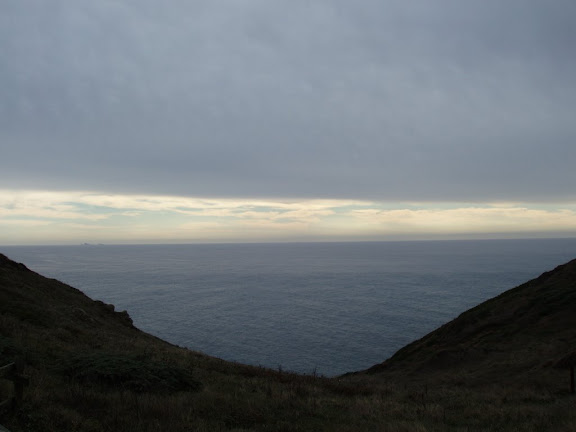
I'm in love. Yes, she's an alien! But she's my fuzzy alien!
I'm sad. Yes, she's away. Yes, I am still looking for my home, again.
I feel peaceful. Could it be the picture?
I feel loved. I feel missed. I feel alone and never alone. I am in the middle of... nothing. Somewhere, everywhere, something somehow will somewhat happen. I feel... too much, too little? Some things cannot be too much. Or too little. This would be a good start for a theory of nothigness
I can't... can I? I can't make you think. I can't make you move. I can't make you curious... I am weak... and you are inert. You are dead... but did I kill you? If we are all so liveless, how can God be alive? What do you feel everyday?... Question that, now not later...
Keep yourself alive.
Thursday, September 14, 2006
[PTP] Aristotle - Happiness

Picture:
Wild Mountain, Owens Valley, California
... peace, or happiness?
The following are: Quotes from Aristotelian Nicomachean Ethics
(Check out www.constitution.org/ari/ethic_00.htm for more info)
My comments are in Italic
Book I
8. We must consider it (good), however, in the light not only of our conclusion and our promises, but also of what is commonly said about it; for with a true view all the data harmonize, but with a false one the facts soon clash. Now goods have been divided into three classes, and some are described as external, others as relating to soul or to body; we call those that relate to soul most properly and truly goods, and psychical actions and activities we class as relating to soul. Therefore our account must be sound, at least according to this view, which is an old one and agreed on by philosophers. It is correct also in that we identify the end with certain actions and activities; for thus it falls among goods of the soul and not among external goods. Another belief which harmonizes with our account is that the happy man lives well and does well; for we have practically defined happiness as a sort of good life and good action. The characteristics that are looked for in happiness seem also, all of them, to belong to what we have defined happiness as being. For some identify happiness with virtue, some with practical wisdom, others with a kind of philosophic wisdom, others with these, or one of these, accompanied by pleasure or not without pleasure; while others include also external prosperity. Now some of these views have been held by many men and men of old, others by a few eminent persons; and it is not probable that either of these should be entirely mistaken, but rather that they should be right in at least some one respect or even in most respects.
With those who identify happiness with virtue or some one virtue our account is in harmony; for to virtue belongs virtuous activity. But it makes, perhaps, no small difference whether we place the chief good in possession or in use, in state of mind or in activity. For the state of mind may exist without producing any good result, as in a man who is asleep or in some other way quite inactive, but the activity cannot; for one who has the activity will of necessity be acting, and acting well (justifying activity as the essence). And as in the Olympic Games it is not the most beautiful and the strongest that are crowned but those who compete (for it is some of these that are victorious), so those who act win, and rightly win, the noble and good things in life.
Their life is also in itself pleasant. For pleasure is a state of soul, and to each man that which he is said to be a lover of is pleasant; e.g. not only is a horse pleasant to the lover of horses, and a spectacle to the lover of sights, but also in the same way just acts are pleasant to the lover of justice and in general virtuous acts to the lover of virtue. Now for most men their pleasures are in conflict with one another because these are not by nature pleasant, but the lovers of what is noble find pleasant the things that are by nature pleasant; and virtuous actions are such, so that these are pleasant for such men as well as in their own nature (could it be any clearer?) . Their life, therefore, has no further need of pleasure as a sort of adventitious charm, but has its pleasure in itself (doesn't that remind you of certain religions of the world?). For, besides what we have said, the man who does not rejoice in noble actions is not even good; since no one would call a man just who did not enjoy acting justly, nor any man liberal who did not enjoy liberal actions; and similarly in all other cases. If this is so, virtuous actions must be in themselves pleasant. But they are also good and noble, and have each of these attributes in the highest degree, since the good man judges well about these attributes; his judgment is such as we have described. Happiness then is the best, noblest, and most pleasant thing in the world, and these attributes are not severed as in the inscription at Delos --
Most noble is that which is justest, and best is health;
But pleasantest is it to win what we love.(sniff... beautiful!)
For all these properties belong to the best activities; and these, or one -- the best -- of these, we identify with happiness.
Yet evidently, as we said, it needs the external goods as well; for it is impossible, or not easy, to do noble acts without the proper equipment. In many actions we use friends and riches and political power as instruments; and there are some things the lack of which takes the lustre from happiness, as good birth, goodly children, beauty; for the man who is very ugly in appearance or ill-born or solitary and childless is not very likely to be happy, and perhaps a man would be still less likely if he had thoroughly bad children or friends or had lost good children or friends by death. As we said, then, happiness seems to need this sort of prosperity in addition; for which reason some identify happiness with good fortune, though others identify it with virtue.
9. (this is only if you want to know why only conscientious human beings can be happy:)
For this reason also the question is asked, whether happiness is to be acquired by learning or by habituation or some other sort of training, or comes in virtue of some divine providence or again by chance. Now if there is any gift of the gods to men, it is reasonable that happiness should be god-given, and most surely god-given of all human things inasmuch as it is the best. But this question would perhaps be more appropriate to another inquiry; happiness seems, however, even if it is not god-sent but comes as a result of virtue and some process of learning or training, to be among the most godlike things; for that which is the prize and end of virtue seems to be the best thing in the world, and something godlike and blessed.
It will also on this view be very generally shared; for all who are not maimed as regards their potentiality for virtue may win it by a certain kind of study and care. But if it is better to be happy thus than by chance, it is reasonable that the facts should be so, since everything that depends on the action of nature is by nature as good as it can be, and similarly everything that depends on art or any rational cause, and especially if it depends on the best of all causes. To entrust to chance what is greatest and most noble would be a very defective arrangement.
The answer to the question we are asking is plain also from the definition of happiness; for it has been said to be a virtuous activity of soul, of a certain kind. Of the remaining goods, some must necessarily pre-exist as conditions of happiness, and others are naturally co-operative and useful as instruments. And this will be found to agree with what we said at the outset; for we stated the end of political science to be the best end, and political science spends most of its pains on making the citizens to be of a certain character, viz. good and capable of noble acts.
It is natural, then, that we call neither ox nor horse nor any other of the animals happy; for none of them is capable of sharing in such activity. For this reason also a boy is not happy; for he is not yet capable of such acts, owing to his age; and boys who are called happy are being congratulated by reason of the hopes we have for them. For there is required, as we said, not only complete virtue but also a complete life, since many changes occur in life, and all manner of chances, and the most prosperous may fall into great misfortunes in old age, as is told of Priam in the Trojan Cycle; and one who has experienced such chances and has ended wretchedly no one calls happy.
10. [...] For no function of man has so much permanence as virtuous activities (these are thought to be more durable even than knowledge of the sciences), and of these themselves the most valuable are more durable because those who are happy spend their life most readily and most continuously in these; for this seems to be the reason why we do not forget them. The attribute in question, then, will belong to the happy man, and he will be happy throughout his life; for always, or by preference to everything else, he will be engaged in virtuous action and contemplation, and he will bear the chances of life most nobly and altogether decorously, if he is 'truly good' and 'foursquare beyond reproach'.13. (what is happiness? what is virtue?)
Since happiness is an activity of soul in accordance with perfect virtue, we must consider the nature of virtue; for perhaps we shall thus see better the nature of happiness. [...] But clearly the virtue we must study is human virtue; for the good we were seeking was human good and the happiness human happiness. By human virtue we mean not that of the body but that of the soul; and happiness also we call an activity of soul. [...]
Some things are said about it, adequately enough, even in the discussions outside our school, and we must use these; e.g. that one element in the soul is irrational and one has a rational principle. Whether these are separated as the parts of the body or of anything divisible are, or are distinct by definition but by nature inseparable, like convex and concave in the circumference of a circle, does not affect the present question.
Of the irrational element one division seems to be widely distributed, and vegetative in its nature, I mean that which causes nutrition and growth; for it is this kind of power of the soul that one must assign to all nurslings and to embryos, and this same power to fullgrown creatures; this is more reasonable than to assign some different power to them. Now the excellence of this seems to be common to all species and not specifically human; for this part or faculty seems to function most in sleep, while goodness and badness are least manifest in sleep (whence comes the saying that the happy are not better off than the wretched for half their lives; and this happens naturally enough, since sleep is an inactivity of the soul in that respect in which it is called good or bad), unless perhaps to a small extent some of the movements actually penetrate to the soul, and in this respect the dreams of good men are better than those of ordinary people. Enough of this subject, however; let us leave the nutritive faculty alone, since it has by its nature no share in human excellence.
There seems to be also another irrational element in the soul -- one which in a sense, however, shares in a rational principle. For we praise the rational principle of the continent man and of the incontinent, and the part of their soul that has such a principle, since it urges them aright and towards the best objects; but there is found in them also another element naturally opposed to the rational principle, which fights against and resists that principle. For exactly as paralysed limbs when we intend to move them to the right turn on the contrary to the left, so is it with the soul; the impulses of incontinent people move in contrary directions. But while in the body we see that which moves astray, in the soul we do not. No doubt, however, we must none the less suppose that in the soul too there is something contrary to the rational principle, resisting and opposing it. In what sense it is distinct from the other elements does not concern us. Now even this seems to have a share in a rational principle, as we said; at any rate in the continent man it obeys the rational principle and presumably in the temperate and brave man it is still more obedient; for in him it speaks, on all matters, with the same voice as the rational principle.
Therefore the irrational element also appears to be two-fold. For the vegetative element in no way shares in a rational principle, but the appetitive and in general the desiring element in a sense shares in it, in so far as it listens to and obeys it; this is the sense in which we speak of 'taking account' of one's father or one's friends, not that in which we speak of 'accounting for a mathematical property. That the irrational element is in some sense persuaded by a rational principle is indicated also by the giving of advice and by all reproof and exhortation. And if this element also must be said to have a rational principle, that which has a rational principle (as well as that which has not) will be twofold, one subdivision having it in the strict sense and in itself, and the other having a tendency to obey as one does one's father.
Virtue too is distinguished into kinds in accordance with this difference; for we say that some of the virtues are intellectual and others moral, philosophic wisdom and understanding and practical wisdom being intellectual, liberality and temperance moral. For in speaking about a man's character we do not say that he is wise or has understanding but that he is good-tempered or temperate; yet we praise the wise man also with respect to his state of mind; and of states of mind we call those which merit praise virtues.
Book II
5. Next we must consider what virtue is. Since things that are found in the soul are of three kinds -- passions, faculties, states of character -- virtue must be one of these. By passions I mean appetite, anger, fear, confidence, envy, joy, friendly feeling, hatred, longing, emulation, pity, and in general the feelings that are accompanied by pleasure or pain; by faculties the things in virtue of which we are said to be capable of feeling these, e.g. of becoming angry or being pained or feeling pity; by states of character the things in virtue of which we stand well or badly with reference to the passions, e.g. with reference to anger we stand badly if we feel it violently or too weakly, and well if we feel it moderately; and similarly with reference to the other passions.
Now neither the virtues nor the vices are passions, because we are not called good or bad on the ground of our passions, but are so called on the ground of our virtues and our vices, and because we are neither praised nor blamed for our passions (for the man who feels fear or anger is not praised, nor is the man who simply feels anger blamed, but the man who feels it in a certain way), but for our virtues and our vices we are praised or blamed.
Again, we feel anger and fear without choice, but the virtues are modes of choice or involve choice. Further, in respect of the passions we are said to be moved, but in respect of the virtues and the vices we are said not to be moved but to be disposed in a particular way.
For these reasons also they are not faculties; for we are neither called good nor bad, nor praised nor blamed, for the simple capacity of feeling the passions; again, we have the faculties by nature, but we are not made good or bad by nature; we have spoken of this before. If, then, the virtues are neither passions nor faculties, all that remains is that they should be states of character.
Thus we have stated what virtue is in respect of its genus.
6. (what is virtue, what does it imply?) [...]
We must, however, not only describe virtue as a state of character, but also say what sort of state it is. We may remark, then, that every virtue or excellence both brings into good condition the thing of which it is the excellence and makes the work of that thing be done well; e.g. the excellence of the eye makes both the eye and its work good; for it is by the excellence of the eye that we see well. Similarly the excellence of the horse makes a horse both good in itself and good at running and at carrying its rider and at awaiting the attack of the enemy. Therefore, if this is true in every case, the virtue of man also will be the state of character which makes a man good and which makes him do his own work well.
How this is to happen we have stated already, but it will be made plain also by the following consideration of the specific nature of virtue. In everything that is continuous and divisible it is possible to take more, less, or an equal amount, and that either in terms of the thing itself or relatively to us; and the equal is an intermediate between excess and defect. By the intermediate in the object I mean that which is equidistant from each of the extremes, which is one and the same for all men; by the intermediate relatively to us that which is neither too much nor too little -- and this is not one, nor the same for all. For instance, if ten is many and two is few, six is the intermediate, taken in terms of the object; for it exceeds and is exceeded by an equal amount; this is intermediate according to arithmetical proportion. But the intermediate relatively to us is not to be taken so; if ten pounds are too much for a particular person to eat and two too little, it does not follow that the trainer will order six pounds; for this also is perhaps too much for the person who is to take it, or too little -- too little for Milo, too much for the beginner in athletic exercises. The same is true of running and wrestling. Thus a master of any art avoids excess and defect, but seeks the intermediate and chooses this -- the intermediate not in the object but relatively to us.
[...] (for more details read chapters 6-8 from the website)
Virtue, then, is a state of character concerned with choice, lying in a mean, i.e. the mean relative to us, this being determined by a rational principle, and by that principle by which the man of practical wisdom would determine it. Now it is a mean between two vices, that which depends on excess and that which depends on defect; and again it is a mean because the vices respectively fall short of or exceed what is right in both passions and actions, while virtue both finds and chooses that which is intermediate. Hence in respect of its substance and the definition which states its essence virtue is a mean, with regard to what is best and right an extreme.
9. [...] Hence he who aims at the intermediate must first depart from what is the more contrary to it, as Calypso advises
ALSO READ:
Aristotle - The basics
Aristotle - MY STATEMENT
[PTP] Aristotle - The basics
 Picture:
Tuscan Morning, Italy
The beginning might be blurry, but it's just an appearance.
PTP is short from: (The) Path To Philosophy
The following are: Quotes from Aristotle's Nicomachean Ethics
(Check out www.constitution.org/ari/ethic_00.htm for more info)
My comments are in Italic
Book I
1. EVERY art and every inquiry, and similarly every action and pursuit, is thought to aim at some good; and for this reason the good has rightly been declared to be that at which all things aim. But a certain difference is found among ends; some are activities, others are products apart from the activities that produce them. Where there are ends apart from the actions, it is the nature of the products to be better than the activities. Now, as there are many actions, arts, and sciences, their ends also are many; the end of the medical art is health, that of shipbuilding a vessel, that of strategy victory, that of economics wealth. But where such arts fall under a single capacity -- as bridle-making and the other arts concerned with the equipment of horses fall under the art of riding, and this and every military action under strategy, in the same way other arts fall under yet others -- in all of these the ends of the master arts are to be preferred to all the subordinate ends; for it is for the sake of the former that the latter are pursued. It makes no difference whether the activities themselves are the ends of the actions, or something else apart from the activities, as in the case of the sciences just mentioned.
2. If, then, there is some end of the things we do, which we desire for its own sake (everything else being desired for the sake of this), and if we do not choose everything for the sake of something else (for at that rate the process would go on to infinity, so that our desire would be empty and vain), clearly this must be the good and the chief good. Will not the knowledge of it, then, have a great influence on life? [...]
3. Now each man judges well the things he knows, and of these he is a good judge. And so the man who has been educated in a subject is a good judge of that subject, and the man who has received an all-round education is a good judge in general. Hence a young man is not a proper hearer of lectures on political science; for he is inexperienced in the actions that occur in life, but its discussions start from these and are about these; and, further, since he tends to follow his passions, his study will be vain and unprofitable, because the end aimed at is not knowledge but action. And it makes no difference whether he is young in years or youthful in character; the defect does not depend on time, but on his living, and pursuing each successive object, as passion directs. For to such persons, as to the incontinent, knowledge brings no profit; but to those who desire and act in accordance with a rational principle knowledge about such matters will be of great benefit.
4. Let us resume our inquiry and state, in view of the fact that all knowledge and every pursuit aims at some good, what it is that we say political science aims at and what is the highest of all goods achievable by action. Verbally there is very general agreement; for both the general run of men and people of superior refinement say that it is happiness, and identify living well and doing well with being happy; but with regard to what happiness is they differ, and the many do not give the same account as the wise. For the former think it is some plain and obvious thing, like pleasure, wealth, or honour; they differ, however, from one another -- and often even the same man identifies it with different things, with health when he is ill, with wealth when he is poor; but, conscious of their ignorance, they admire those who proclaim some great ideal that is above their comprehension. Now some thought that apart from these many goods there is another which is self-subsistent and causes the goodness of all these as well. To examine all the opinions that have been held were perhaps somewhat fruitless; enough to examine those that are most prevalent or that seem to be arguable.[...]
Great one:
5.[...] To judge from the lives that men lead, most men, and men of the most vulgar type, seem (not without some ground) to identify the good, or happiness, with pleasure (hedonists); which is the reason why they love the life of enjoyment. For there are, we may say, three prominent types of life -- that just mentioned, the political, and thirdly the contemplative life. Now the mass of mankind are evidently quite slavish in their tastes, preferring a life suitable to beasts, but they get some ground for their view from the fact that many of those in high places share the tastes of Sardanapallus. A consideration of the prominent types of life shows that people of superior refinement and of active disposition identify happiness with honour; for this is, roughly speaking, the end of the political life. But it seems too superficial to be what we are looking for, since it is thought to depend on those who bestow honour rather than on him who receives it, but the good we divine to be something proper to a man and not easily taken from him. Further, men seem to pursue honour in order that they may be assured of their goodness; at least it is by men of practical wisdom that they seek to be honoured, and among those who know them, and on the ground of their virtue; clearly, then, according to them, at any rate, virtue is better. And perhaps one might even suppose this to be, rather than honour, the end of the political life. But even this appears somewhat incomplete; for possession of virtue seems actually compatible with being asleep, or with lifelong inactivity, and, further, with the greatest sufferings and misfortunes; but a man who was living so no one would call happy, unless he were maintaining a thesis at all costs. But enough of this; for the subject has been sufficiently treated even in the current discussions. Third comes the contemplative life, which we shall consider later. The life of money-making is one undertaken under compulsion, and wealth is evidently not the good we are seeking (and this was 2000 years ago!); for it is merely useful and for the sake of something else. And so one might rather take the aforenamed objects to be ends; for they are loved for themselves. But it is evident that not even these are ends; yet many arguments have been thrown away in support of them. Let us leave this subject, then.
6. [...] (see how he reaches a conclusion about good:) Clearly, then, goods must be spoken of in two ways, and some must be good in themselves, the others by reason of these. Let us separate, then, things good in themselves from things useful, and consider whether the former are called good by reference to a single Idea. What sort of goods would one call good in themselves? Is it those that are pursued even when isolated from others, such as intelligence, sight, and certain pleasures and honours? Certainly, if we pursue these also for the sake of something else, yet one would place them among things good in themselves. Or is nothing other than the Idea of good good in itself? In that case the Form will be empty. But if the things we have named are also things good in themselves, the account of the good will have to appear as something identical in them all, as that of whiteness is identical in snow and in white lead. But of honour, wisdom, and pleasure, just in respect of their goodness, the accounts are distinct and diverse. The good, therefore, is not some common element answering to one Idea.
7. Let us again return to the good we are seeking, and ask what it can be. It seems different in different actions and arts; it is different in medicine, in strategy, and in the other arts likewise. What then is the good of each? Surely that for whose sake everything else is done. In medicine this is health, in strategy victory, in architecture a house, in any other sphere something else, and in every action and pursuit the end; for it is for the sake of this that all men do whatever else they do. Therefore, if there is an end for all that we do, this will be the good achievable by action, and if there are more than one, these will be the goods achievable by action.
(how we know happiness is our goal - read more on the website:) Now such a thing happiness, above all else, is held to be; for this we choose always for self and never for the sake of something else, but honour, pleasure, reason, and every virtue we choose indeed for themselves (for if nothing resulted from them we should still choose each of them), but we choose them also for the sake of happiness, judging that by means of them we shall be happy. Happiness, on the other hand, no one chooses for the sake of these, nor, in general, for anything other than itself.
[...] From the point of view of self-sufficiency the same result seems to follow; for the final good is thought to be self-sufficient. Now by self-sufficient we do not mean that which is sufficient for a man by himself, for one who lives a solitary life, but also for parents, children, wife, and in general for his friends and fellow citizens, since man is born for citizenship. But some limit must be set to this; for if we extend our requirement to ancestors and descendants and friends' friends we are in for an infinite series. Let us examine this question, however, on another occasion; the self-sufficient we now define as that which when isolated makes life desirable and lacking in nothing; and such we think happiness to be; and further we think it most desirable of all things, without being counted as one good thing among others -- if it were so counted it would clearly be made more desirable by the addition of even the least of goods; for that which is added becomes an excess of goods, and of goods the greater is always more desirable. Happiness, then, is something final and self-sufficient, and is the end of action. (This is genius!)
(The way Aristotle describes the soul:)
Presumably, however, to say that happiness is the chief good seems a platitude, and a clearer account of what it is still desired. This might perhaps be given, if we could first ascertain the function of man. For just as for a flute-player, a sculptor, or an artist, and, in general, for all things that have a function or activity, the good and the 'well' is thought to reside in the function, so would it seem to be for man, if he has a function. Have the carpenter, then, and the tanner certain functions or activities, and has man none? Is he born without a function? Or as eye, hand, foot, and in general each of the parts evidently has a function, may one lay it down that man similarly has a function apart from all these? What then can this be? Life seems to be common even to plants, but we are seeking what is peculiar to man. Let us exclude, therefore, the life of nutrition and growth. Next there would be a life of perception, but it also seems to be common even to the horse, the ox, and every animal. There remains, then, an active life of the element that has a rational principle; of this, one part has such a principle in the sense of being obedient to one, the other in the sense of possessing one and exercising thought. And, as 'life of the rational element' also has two meanings, we must state that life in the sense of activity is what we mean; for this seems to be the more proper sense of the term. Now if the function of man is an activity of soul which follows or implies a rational principle, and if we say 'so-and-so-and 'a good so-and-so' have a function which is the same in kind, e.g. a lyre, and a good lyre-player, and so without qualification in all cases, eminence in respect of goodness being idded to the name of the function (for the function of a lyre-player is to play the lyre, and that of a good lyre-player is to do so well): if this is the case, and we state the function of man to be a certain kind of life, and this to be an activity or actions of the soul implying a rational principle, and the function of a good man to be the good and noble performance of these, and if any action is well performed when it is performed in accordance with the appropriate excellence: if this is the case, human good turns out to be activity of soul in accordance with virtue, and if there are more than one virtue, in accordance with the best and most complete.
But we must add 'in a complete life.' For one swallow does not make a summer, nor does one day; and so too one day, or a short time, does not make a man blessed and happy.(how can you not like this?)
ALSO:
Aristotle - Happiness
Aristotle - MY STATEMENT
Sunday, June 04, 2006
"Despre ingeri"
Am inceput sa citesc o carte foarte interesanta. V-o recomand, chiar si pentru cei ce nu cred in Dumnezeu (sau oricum nu in cel al crestinolor). Studiul angelologiei e foarte bine redactat in cartea "Despre ingeri", al carei autor este Andrei Plesu, si care m-a determinat sa cercetez mai departe (mai ales Judecata de Apoi in conceptia crestina, dar si altele...). Vei vedea ca, daca-i acorzi o sansa, afirmatiile sale sunt mai interesante decat te-ai astepta. Eu o sa includ doar fragmente, la adresa http://www.gewissen.as.ro/
Comentarii si pareri puteti sa lasati aici... si daca aveti intrebari sau recomandari (eventual daca mai vreti pagini)... tot aici. Enjoy!
Tuesday, May 16, 2006
Libelula
Martin Page - Libelula
Fragment, flashback al lui Fio Regale:
Ea avea treisprezece ani. Un tanar adolescent venise spre ea, de foarte departe, pentru ca totul se intamplase demult. Ea privea copertile cartilor de la biblioteca municipala din Nantes, cu speranta ca vreuna ii va face cu ochiul. Baiatul era imbracat ca si cum n-ar fi facut-o intr-adins, camasa ii iesea de sub puloverul vechi, sireturile nu mai fusesera legate de vreo cateva furtuni incoace, iar pantalonii de catifea maro, prea largi, erau patati. Scena se petrecea intr-o sambata dimineata, in ziua cand ea uita intotdeauna drumul spre liceu si chiulea de la ora de muzica a unui profesor care avea o diploma ce il autoriza sa umileasca elevii mai putin convinsi de necesitatea de a canta mlodii de Joe Dassin la flaut. Biatul ii zise pardon si cu o voce dulce si un pic ezitanta o intreba daca biblioteca avea intre rafturile sale un locsor unde ar fi putut trai volumele de poeme ale lui S. In epoca aceea maduva spinarii lui Fio decisese deja ca S. va fi poetul ei favorit. Aceasta intalnire cu un baiat de varsta ei care ii impartasea pasiunea era atat de incredibila incat nici nu fusese surprinsa. Fio fusese mereu mult mai mirata de lucrurile banale si pe care ceilalti le gaseau normale, de acele intalniri prevazute, de destinele strabatute dinainte de frazele de-a gata care ieseau din frumoase capete durdulii. Il atrase catre fisierul alfabetic care dadea pe din afara de nume incepand cu toate literele alfabetului si a carui singura calitate era adesea chiar asta. Gasira ceea ce asteptau: in aceasta mare biblioteca municipala, cartile despre trompete si nave spatiale, romanele care cresc in temnite, eseurile despre exact toate subiectele... toate aceste carti prosperau. Dar nu era nici o carte de S. Baiatul si Fio nu fura dezamagiti sa descopera ca stiusera dinainte cat de sterila avea sa le fie cautarea. Dar se intalnisera datorita lui S., se intalnisera, si pentru Fio nu mai era important sa stie daca poemele lui existau, daca poetul acesta strabatuse el insusi malurile lacului Genevei. Discutara cateva clipe, clipe in care Pamantul se invarte de tot atatea ori in jurul Soarelui. Baiatul se inscrise la biblioteca, Fio ii auzi numele si il agata de o suvita a memoriei sale, ca pe un origami. O intreba daca venea des, ea raspunse da, o intreba ai sa fii aici sambata viitoare la aceeasi ora, ea raspunse da.
Sambata urmatoare, un profesor o retinu suficient ca sa ajunga la timp la destinul ei ratat. Il astepta pe baiat ore in sir, dar fara sa dea impresia ca o face, fara sa isi dea seama ea insai de asta. Numai dupa cativa ani isi dadu seama ea ca nu ramasese ca sa citeasca volumul acela gros dspre testoasele de mare. Poate ca era prea mandra ca sa astepte pe cineva, poate ca era prea individualista pentru a astepta ceva de la cineva, sau poate era prea lucida ca sa stie ca lucrurile astea nu exista, aceste intalniri reusite ale unor fiinte care nu mai sunt copii, dar nici nu sunt inca adulti. Constatase adesea ca viata stie mereu sa fie la inaltimea viselor sfaramate. Asemenea momente se nasc pentru a fi tradate de realitate si pentru a fauri fiinte care vor gasi in ele mai tarziu justificarea propriei lasitati.
In anii care au urmat, sfarsise prin a crede ca baiatul fusese un vis si ca, in fond, asta se potrivea cu obrajii lui palizi. In ziua celei de-a optsprezecea aniversari, FIo cauta nitelus distrata numarul de telefon al visului ei intr-o carte de telefoane reala. Ii scrise o scrisoare relatandu-i ziua intalnirii lor. El i raspunse ca isi amintea si ca ii va face placere sa o revada. Se reintalnire intr-un parc. Nu se cunosteau, dar se recunoscura de indata si isi vorbira ca si cum nu s-ar fi despartit decat ieri, ca si cum in acesti ani prietenia lor hibernase. Un tanar inalt, elegant, rodise si crescuse din vechiul baiat prost imbracat; timiditatea lui fusese zdrobita sub buldozerul relatiilor umane; anii ii pieptanasera parul si ii calcasera hainele; reusita ii alterase gesturile stangace, dandu-i maniere gratioase. Devenise vecinul de vizavi, prietenul fetei din randul al treilea, baiatul cu sortul rosu care marcheaza punctul decisiv intr-un turneu universitar de baschet... Adica devenise aproape un oricine.
Exista fiinte pe care le asasinezi obligandu-le sa existe. Uneori, nu trebuie sa li se permita oamenilor sa fie vii, chiar daca asta inseamna sa nu traiasca decat din mangaieri tesute cu partea cea mai taioasa a aerului. Nu ca Fio ar prefera visele fiintelor reale, dar gasea ca visele aveau o conversatie mai interesanta si mainile mai calde. Stia ca era o greseala sa le confunde, unele din amicele ei sparsesera destule lacrimi pe mirajul aceta. Fio nu gasise aproape niciodata destula realitate in persoanele reale. In general, i se pareau rau imaginate, ca niste fictiuni fotocopiate si decolorate la spalat. Baiatul nu mai semana cu o amintire. In noaptea de dupa noiembrie, era decembrie; desteptatorul pus pe podeaua camerei ei sunase si a fost iarna.
Monday, May 08, 2006
"Balaurul"
Fragment din opera scriitoarei:
"Gandul i se oprea acum la legenda aceea a finetelor... Din amor... si din participarea naturii, din vecinatatea firii si adaosul vitalitatii exterioare la impulsia zamislitoare... Din totalitatea si armonia gesturilor fecunde: fiindca stelele clipeau si tremura iarba si lutul mijea; fiindca snopii infierbantati rasuflau si gemea din miezul boabelor coapte; fiindca roiau vietati nenumarate in preajma si palpitau undele eterice.
Tot ce convergea spre gestul creator era miscarea, tot ce-l comanda, tot ce-l stanjenea era emotie.
Faptura care se zamislea era deosebita si imbogatita din libertatea si consimtimantul complice al naturii in framat, cum si din spaima precipitata a instinctelor.
Hristosul mic fusese si el un prunc carnos si fraged pe genunchii fecioarei. Geniul acelor care-l zugravisera o stiau bine. Toti evanghelistii aduceau dovada miracolului care l-a adus pe lume in staul, si magii, calatori pe drumurile stelelor principale, marturiseau ca era nascut sub luceferi.
Nu lipsise vecinatatea fecunda a firii, nici ipnoza siderala. Din flori era culeasa mierea cuvantului bland, care fermecase omenirea, iar cugetarea luminoasa, radiata spre inaltimi inaccesibile, din palpitul aurului planetar.
Dar pe Laura taina creatiunii, cu violenta si brutalitatea imboldurilor firii, o speria. Pentru ea viata incepea acolo unde incepea sufletul.
Cercetarea cucoanei moase se oprea la albia pruncilor dolofani. Dar copii naturii purtau si cresteau adesea un suflet delicat si visator. Frumosi si sanatosi ca poamele curate, din voluptate si natura luau darul spiritualitatii. Printre ei, Fiul Fecoarei, cu sanatatea unor energii simple, se inaltase pana la suprema idealitate.
Laura acuma intelegea ca instinctul latent al materiei, atunci cand se dezvolta pana la potenta faptei creatoare, tot el, dupa sfortarea suprema a brutalitatii, desprinde substanta materiala.
Rasuflarea grea a finetelor si plantelor cand a atins maximul ei de senzualitate, urneste eterul volatil si degaja parfumul, simtirea, ideea.
De pe efervescenta ingrasamintelor se inalta fumul usor. E o capacitate a substantei ca din impulsia sismica a vietii sa nasca idealul, poezia, armonia, in natura ca si in faptura.
Laura cauta atunci cauzele ancestrale necunoscute, imperecherea strabuna pasionata, care-i harazise durerea nobila a iluziei si amagirea gingase a idealitatei.
Erau insa pentru aceeasi lege doua infatisari. In temnita dosnica a oraselor, venirile pe lume neingaduite, cele in afara de casatoria marturisita, erau pline de josnicie si tristeta. [...]"
- Hortensia Papadat-Bengescu - Balaurul
Atat am putut "culege". Recomand cartea pentru trairea repetata a sentimentelor personajului principal, si nu pentru actiune.
Thursday, May 04, 2006
"Inainte de tacere"
Tocmai am terminat de citit cartea, si am ramas impresionat. Impart cu voi o insiruire de citate pline de insemnatate: "De asemenea, se organizau pe atunci marsuri pentru generalul Sandino si pentru nobilii si vitejii Sacco si Vanzetti. Manifestatiile adunau vreo suta de mii de muncitori si studenti, unii sub steagul rosu al socialistilor, iar altii - anarhistii - sub steagul rosu-negru. In toata lumea au avut loc proteste de solidaritate cu cei doi martiri ai miscarii, condamnati la moarte pentru o crima pe care nu o comisesera. Ca si in cazul muncitorilor din Chicago, tribunalele nord-americane au trebuit sa le recunoasca nevinovatia. Au murit cu curaj si demnitate. Intr-un film pe care, dupa oi vreme, l-au facut americanii cu intentia de a dezvalui adevarul, apare si aceasta emotionanta scrisoare pe care Vanzetti a scris-o fiului sau:
'Iubitul meu fiu, v-am visat zi si noapte. Nu stiam daca eram viu sau mort. As fi vrut sa va imbratisez, pe tine si pe mama ta. Iarta-ma, fiule, pentreu aceasta moarte nedreapta, care te-a lasat atat de repede fara tata. Astazi ne pot asasina, dar nu ne vor putea distruge ideile. Ele vor ramane pentru generatiile viitoare, pentru cei tineri ca tine. Aminteste-ti, fiul meu, de fericirea pe care o simti atunci cand te joci, nu o acapara pe toata doar pentru tine! Incearca sa-ti intelegi cu umilinta aproapele, ajuta-i pe cei slabi, mangaie-i pe cei care plang. Ajuta-i pe cei oprimati. Ei iti vor fi cei mai buni prieteni. Adio, sotia mea! Fiul meu! Tovarasi!'
Bartolomeo Vanzetti"
"Fapt e ca toti oamenii au de-a face cu o dubla existenta: cea diurna si cea nocturna. Un amarat de functionar viseaza noaptea ca isi asasineaza seful cu lovituri de cutit, iar ziua il saluta cu respect. Fiinta umana este in mod esential contradictoriei, si pana si Descartes, piatra de hotar a rationalismului, si-a creat principiile teoriei sale plecand de la trei vise avute. Frumos inceput pentru un aparator al ratiunii!"
"Ratacit intr-o lume in descompunere, intre ramasitele unor ideologii falimentare, scrisul era pentru mine mijlocul fundmental, cel mai puternic si absolut, care imi putea perrmite sa exprim haosul in care ma zbateam; asa mi-am putut elibera nu doar ideile, ci, mai ales, obsesiile cele mai ascunse si inexplicable.
Adevarata patrie a omului nhu este orasul pur care l-a fascinat pe Platon. Adevarata lui patrie, la care se intoarce mereu dupa periplele ideatice, este aceasta zona intermediara si pamanteasca a sufletului, acest teritoriu sfasiat in care traim, iubim si suferim. Si intr-o perioada de criza totala numai arta poate exprima nelinistea isi disperarea omului, deoarece, spre deosebire de toate celelalte activitati ale gandirii, ea este singura care-i capteaza in totalitate spiritul, mai ales prin marile fictiuni care ajung sa patrunda in spatiul sacru al poeziei. Creatia este acea parte a simtirii pe care am cucerit-o in lupta cu imensitatea haosului."
"Aflu stirile si deduc ca e inadmisibil sa te abandonezi linistit ideii ca lumea va depasi criza prin care trece.
Dezvoltarea facilitate de tehnica si de economie a avut consecinte funeste pentru omenire. Si, ca si in alte epoci ale istoriei, puterea care parea in principiu cel mai bun aliat al omului, se pregateste din nou sa arunce ultima lopata pe mormantul imperiului sau colosal. [...]
Istoria nu progreseaza. Marele Gianbattista Vico a fost cel care a spus: "Corsi e ricorsi". Istoria e guvernata de miscari de du-te-vino, idee reluata ulterior de Schopenhauer si apoi de Nietzshe. Progresul este valabil doar pentru gandirea pura. Matematicile lui Einstein sunt evident superioare celor ale lui Arhimede. Restul, practic, ce este mai important, trece din scoarta cerebrala in jos. Iar centrul sau este inima, acest organ misterios, o pompa mecanica de sange, un nimic pe langa complexitatea imensa si labirintica a creierului, dar care, din nu stiu ce pricina, ne doare atunci cand ne aflam in fata marilor crize. Din motive pe care nu ajungem sa le cunoastem, se pare ca inima resimte cel mai mult misterele, tristetile, pasiunile, invidiile, resentimentele, dragostea si singuratatea, chiar si existenta lui Dumnezeu si a Diavolului. Omul nu progreseaza pentru ca sufletul sau este acelasi. Cum spune Ecleziastul, "nimic nou sub soare", iar asta se refera precis la inima omului, locuita in toate epocile de aceleasi atribute, impingand spre nobile acte eroice, dar, de asemenea, amagita de rau. Tehnica si ratiunea au fost mijloacele pe care pozitivistii le-au postulat ca pe niste panze care ne-ar ilumina calea spre Progres. Iata lumina care ne conduce! Sfarsitul secolului {e scrisa in '98'} ne surprinde in obscuritate, iar claritatea evanescenta care ne ramane pare sa indice ca suntem inconjurati de umbre. Naufragiat printre neguri, omul inainteaza spre mileniul urmator cuincertitudinea celui care intrezareste un abis.
In 1951 am publicat Oameni si angrenaje. [...]
In cartea aceea imi aratam neincrederea si preocuparea fata de o lume tehnolatra si scientista, fata de aceasta conceptie asupra omului si existentei care a inceput sa se supraaprecieze cand semizeul renascentist s-a lansat euforic in cucerirea universului, cand nelinistea metafizica si religioasa a fost inlocuita de eficacitate, precizie si cunostintele tehnice. Acel proces de neoprit a sfarsit intr-un paradox teribil: dezumanizarea umanitatii. In acea carte, acum mai bine de cincizeci de ani, am scris: 'Acest paradox, ale carui ultime si tragice consecinte le suportam astazi, a fost rezultatul a doua forte dinamice si amorale: banii si ratiunea. CU ele omula cucerit puterea seculara. Dar - si aici se afla radacina paradoxului - a ceasta cucerire se face prin intermediul abstractiunii; de la lingoul de aur la clearing, de la parghie la logaritm, istoria dominatiei crescande a omului asupra universului a fost, de asemenea, istoria abstractiunilor succesive. Capitalismul modern si stiinta pozitiva sunt cele doua fete ale aceleiasi realitati deposedate de atribute concrete, o fantasmagorie abstracta din care face parte si omul, dar nu omul concret si individual, ci omul masa, aceasta fiinta ciudata, cu un aspect mai degraba uman, cu ochi si plansete, voci si emotii, dar in realitate un angrenaj dintr-o uriasa masinarie anonima. Acesta este destinul contradictoriu al acelui semizeu renascentist care si-a revendicat individualitatea, care s-a ridicat cu orgoliu impotriva lui Dumnezeu, proclamandu-si vointa de dominare si de transformare a lucrurilor, ignorand ca, la randul lui, va ajunge sa se transforme in lucru.
[...]
Totul arta ca in interiorul Timpurilor Moderne, laudate cu atata ardoare, se nastea un monstru cu trei capete: rationalismul, materialismul si individualismul.
[...]
Acum cativa ani, doua puteri isi disputau lumea. Odata esuat comunismul, s-a raspandit credinta ca alternativa era neoliberalismul. In realitate, asta e o afirmatie criminala, deoarece e ca atunci cand intr-o lume in care ar exista numai lupi si miei s-ar spune: 'Libertate pentru toti, iar lupii sa manance mieii'.
Se vorbeste acum despre reusitele acestui sistem al carui unic miracol a fost sa concentreze in a cincea parte din omenire mai mult de optzeci la suta din bogatie, in timp ce restul, marea parte a planetei, moare de foame in mizeria cea mai sordida."
Si pentru cei care au globalizarea la public speaking:
"In fiecare dimineata, mii de persoane reiau cautarea inutila si disperata a unui loc de munca. Sunt marginalizatii - o categorie noua, care ne spune foarte multe si despre explozia demografica, si despre incapacitatea acestei economii pentru care singurul lucru care de fapt nu conteaza este omul cu nevoile sale
Sunt marginalizati nevoiasii care raman in afara societatii pentru ca sunt de prisos. Nu se mai spune ca sunt 'cei de jos', ci 'cei din afara'. Sunt exclusi de la necesitatile minime de hrana, sanatate, educatie si justitie; sunt exclusi atat din orase, cat si din locurile lor de bastina. Iar acesti oameni care sunt zilnic lasati pe dinafara [...] reprezinta majoritatea.
[...]
Pentru a face rost de o slujba, oricat de prost platita, oamenii isi ofera vietile pe de-a-ntregul. Muncesc in locuri insalubre, in subsoluri, pe nave-fabrici, inghesuiti sub eterna amenintare de a-si pierde slujba, de a ramene pe dinafara.
Dupa cum se pare, demnitatea vietii omului nu a fost prevazuta in planul globalizarii. Nelinistea e singurul lucru care a ajuns pe culmi niciodata banuite.[...]"
"Intreaga educatie depinde de filozofia culturii care o carmuieste, si din cauza acestor imitatori obedienti ai 'tarilor avansate' - avansate in ce? - dam peste pericolul raspandirii si mai abitir al robotizarii."
"Acum catva timp am vazut un film extraordinar de Emir Kusturica despre disparitia Iugoslaviei. M-a impresionat sinceritatea cu care regizorul arata cruzimea acestei eterminari. Si cand i-am privit pe oamenii aceia din niste subsoluri dezgustatoare, hranind cu durerea lor viata unor indivizi meschini si nemilosi, am simtit ca era vorba de mare metafora a acestui timp in care ceva din umanitatea omului dispare.
O senzatie asemanatoare m-a surprins intr-o seara, in timp ce calatoream cu trenul. A intrat o femeie sfrijita, cu tenul masliniu, care, cu un acordeon prapadit, facea sa sune o muzica lugubra. {presimti?} Pe piept purta un afis in care scria ca trebuise sa fuga din Romania. Am ascultat melodia si am incetat s-o observ pe femeia aceea fara patrie si fara adapost, fara sa mai conteze ca venea din Romania, din Bosnia sau din fosta Iugoslavie. Era doar o fiinta pribeaga [...] Cand femeia s-a indreptat spre vagonul urmator, am intalnit privirea trista a unei fetite pe care o purta pe umeri. Asta m-a facut sa ma gandesc la ce se intampla: o lume care parea sa se indrepte spre propria dezintegrare, in timp ce viata ne privea cu ochii deschisi, flamanzi de atata umanitate."
"Tinerii sufera: ei nu mai doresc sa aiba copii.
Nu exista scepticism mai mare decat acesta.
Ca si animalele din captivitate, tinerele noastre generatii nu mai risca sa devina parinti. In asemenea hal a ajuns lumea pe care le-am incredintat-o. Anorecia, bulimia, drogurile si violenta sunt alte semne ale acestor vremuri de dispret fata de viata a celor care ne conduc.
Cum le-am putea explica bunicilor nostru ca am adus viata in asemenea hal, incat multi tiner mor pentru ca nu mananca sau varsa mancarea? Din cauza lipsei chefului de viat sau pentru a executa comanda data de televiziune: slabirea isterica. [...]
Totul ne duce cu gandul ca Terra se transforma intr-un desert suprapopulat. Nu e intamplator faptul ca, la una din ultimele conferinte ecologice, s-a avansat ipoteza unor razboaie, intr-un viitor nu prea indeparatat, pentru obtinerea apei potabile.
Acest peisaj funebru si nenorocit este opera acelei specii de insi care si-au ras de noi, bietii oameni care de atatia ani ii tot avertizam, acuzandu-ne ca avertismentele noastre sunt nascociri tipice pentru scriitori si poeti fantezisti.
Dupa aceasta inversiune semantica a limbilor lumii, epitetul de "realisti" se refera la acei indivizi care se caracterizeaza prin distrugerea oricarui fel de realitate, de la natura cea mai pura, pana in sufletele oamenilor si copiilor."
"In piata din fata garii, am stat sa privesc un baiat. Si am admirat inca o data cum, in copilarie, timpul trecea incet, ca si cum ar fi fost incremenit. Un infinit se intinde intre Boboteaza care a trecut si cea care va veni, iar anivesarile copiilor se succeda dupa atatea intamplari sau vise, incat urmatorul pare la fel de departe pentru ei ca batranetea insasi.
Aceasta oaza linistita face din copilarie perioada cea mai fertila si mai vulnerabila; copii impartasesc seninatatea copacilor si fecunditatea pamantului. Traiesc un timp care nu se mai sfarseste: cat mai este pana vine Craciunul? Cat mai e pana la ziua mea? Pentru ei trecutul nu exista, iar viitorul este invizibil. Si atunci, fiecare zi este eterna."
- Ernesto Sabato - Inainte de tacere
Pentru cei care mai vor, click aici pentru cateva pagini din carte:


